
I've been hearing complaints about the Thai education system for decades, ever since I was a hot-headed, irritable teenager who didn't know why I was studying this... Now, I understand what it's been like all along...
From childhood to adulthood, we wasted time learning many things we never used.

This is not Tee Lek (me) in his rebellious youth; it is an illustration from the internet.
I have heard complaints about the Thai education system for many years, ever since my hot-blooded youth when I was impatient, frustrated, and wondered why I had to study such things… until now, when I understand that all this time…
From childhood to adulthood, we have spent time studying many things that we never actually use.
I probably could have become many times better if I had spent that time learning what I truly wanted to learn. That is a strong way to begin, but the reason I have done well today is still because I had a good school foundation, with teachers and lecturers who patiently taught and pushed me from childhood through adulthood. But still…
Digital disruption is swallowing everything
It has already begun. Digital disruption is change driven by rapidly advancing technology, creating new business models and new ways of solving problems that would have been impossible before but are now very easy. Let me give some examples.
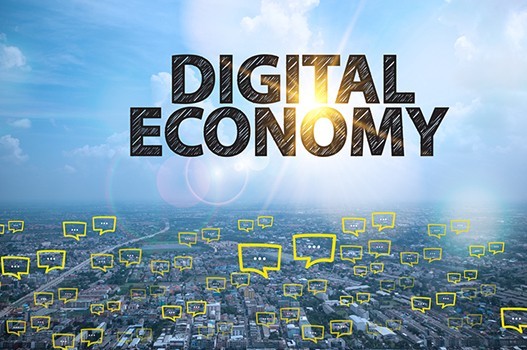
Things that are not good will definitely be changed
We have already been disrupted in many areas.
Do you remember how exhausted we used to be with unpredictable taxi services? Drivers refused rides, ran out of gas and went to refill, or simply drove away. If this had happened in the past, equipping every taxi with GPS, software, and continuous online connectivity would have required huge investment, so we tried to solve the issue through taxi radio centers instead.
But now every taxi driver has a mobile phone. Every taxi can be online anywhere. They can drive and watch movies at the same time, feeling completely relaxed. So now we can solve problems in new ways. GrabTaxi disrupted traditional taxis, Uber turned private cars into taxis, and LineMan turned motorcycle taxi riders into excellent delivery service providers. Sometimes I feel as if we have superpowers—we can summon a car. It is like calling the wind or rain.
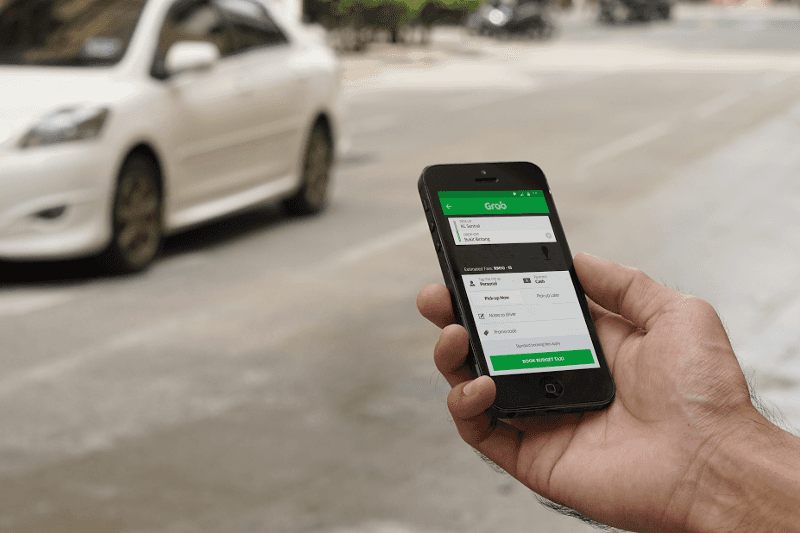
We have superpowers—we can summon a car. Wow.
YouTube: a lifelong source of learning
“It is late already, you can put it down now… that iPad, you play with it all day, it might explode.”
I shouted to my mother before going upstairs to bed, partly out of concern and partly out of exasperation. Ever since I gave her my old iPad, she has sat watching YouTube all day without stopping.
“Well, there are so many interesting things on it. I have not even finished this teacher’s videos yet.”
My mother can spend all day listening to the things she wants to learn without getting tired—cooking, integrated agriculture, making EM fermented liquid, coconut oil, childcare, and so on. After learning, she becomes eager to try it all: cooking new dishes for the family, planting this and making that. None of it succeeds, of course, but it is still amusing. The one who gets tired is my father, because my mother keeps sending him out to buy things for her projects. I do not know how long she will keep watching all those clips, but I do know one thing for sure:
We are now ready to learn whatever we want, anywhere, throughout our lives.
And I also know that if you want your mother to stop complaining, try giving her your old iPad to play with.

This is an illustration from the internet, not my mother, but the feeling is something like this.
Khan Academy: an online school for the future world
Khan Academy is a non-profit organization whose goal is to provide high-quality education to people around the world—for free. It was founded by Salman Khan in 2006.
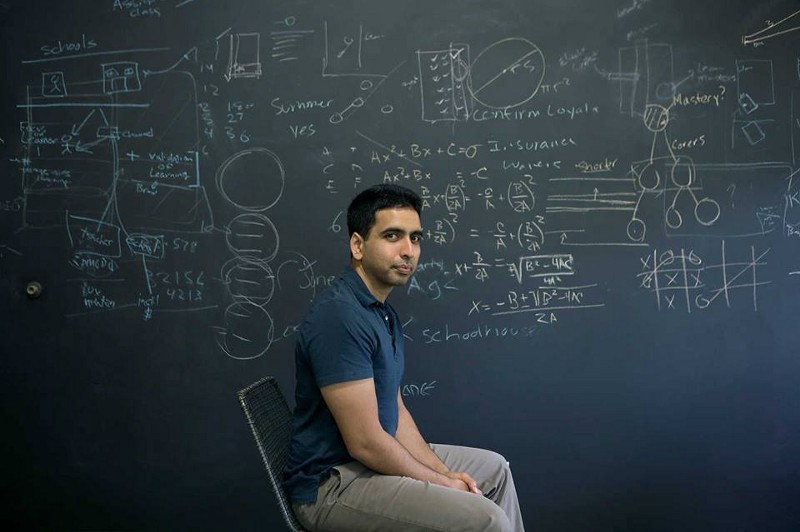
This is the person—remember the face; he will become very famous.
At first I thought it was simply a website that gathered a large number of educational videos so students of all levels and subjects could learn for free. But in reality, it is much more than that. The website divides learning into small lessons, and after each lesson there is a test. The principle is that if a student answers ten questions in a row correctly, that means they understand the topic and can move on to the next lesson.

You must answer 10 in a row correctly to pass
Teachers can also track students learning online to see how far each one has progressed. Green means they have passed, while red means there is a problem. So when a teacher sees a student struggling, the teacher can step in to help, or let another student who has already turned green help instead.
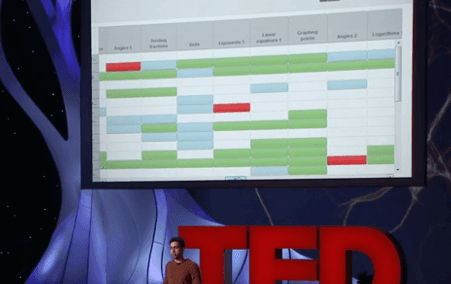
Khan speaking at TED Talk
Each child develops at a different pace. In a classroom where everyone must learn together, slower learners fall behind, while faster learners must wait for their friends, and learning becomes boring. From the development graph, we can see that at some point, someone who was slow at first can become the best by the end. We cannot judge a child as incapable simply because they do not understand at the beginning.

Khan’s learning system gives me hope for the future of Thai education. Children will be able to learn what interests them according to their own path.
And if we think about adult learning, there are many subjects we want to learn that have no textbook and no clear instruction, so we must search for them ourselves through various media—such as investing, parenting, mindset, management, and more. If a system like this existed, we could learn quickly and endlessly.
Read more about Khan Academy here.
What is Khan Academy? / Salman Khan predicts the shape of the education market in the next 10 years / Let’s use video to reinvent education
Home School: let’s study at home
I began looking for information about home schooling—legal ways for children to study at home—because my son is rather slow and cannot keep up with his classmates, which has caused many problems and made him start not wanting to go to school. Home schooling is an answer for children who cannot fit well into the regular education system. The more parents see school as merely a daytime childcare center, the more popular home schooling becomes.
The difficulty of home schooling is “the readiness of the parents,” because they must devote all of their time to teaching their child and preparing lessons each day. Parents who choose home schooling therefore need strong determination to do it for their child.

Home schooling can teach everything, not only academics
Home-schooled children discover themselves more quickly because parents organize teaching around the child’s interests. Home-schooled children tend to be eager to learn and develop self-learning skills, unlike children in the mainstream school system who wait for the teacher to teach them.
Since I first heard about home schooling until now, I have continued to hear success stories of home-schooled children—champions in e-sports, snooker, music, sports, and more. Therefore, I believe that
In the future, more and more parents will choose home schooling / Home-schooled children will be more capable and faster than children in regular schools
Coder Dojo: a coding school for young programmers
Home schooling can raise many questions, such as whether children who study at home will lack social interaction, close friends, or social skills, and many parents may not be capable enough to teach some subjects themselves.
Today, learning groups have started to emerge, called Dojos, meaning a school or training place. The goal is to bring together children who are interested in the same subject every week so they can learn together. I first heard about this from Khun Charee (Misari Mukbil), founder of CoderDojo Thailand, who dares to let children experiment.
“Ask three then me.” Ask three friends first, then ask the mentor.
A dojo is not a tutoring group or extra class. It is a collaborative learning group. The rules are simple: children must learn what interests them by themselves, ask their friends first if they have problems, and only ask the mentor if they truly cannot solve it. For parents and children from mainstream schools, it may feel strange because there is no teacher leading the class. But for home-schooled children, it is a very enjoyable place because everyone is interested in the same thing and helps each other solve problems.
A dojo is not limited only to programming. We can create many types of dojo for skill development, such as dance, singing, music, stocks, LEGO, and more.
Setting up a dojo is not difficult at all. We simply need:
Champion: someone who kindly provides the space, just a room with an area, seats, and Wi-Fi
Mentor: someone with knowledge in that field (not necessarily highly advanced) who can learn together with the children
Ninja: children who are interested and curious, plus a notebook computer
Then everyone meets weekly to exchange knowledge and learn together.
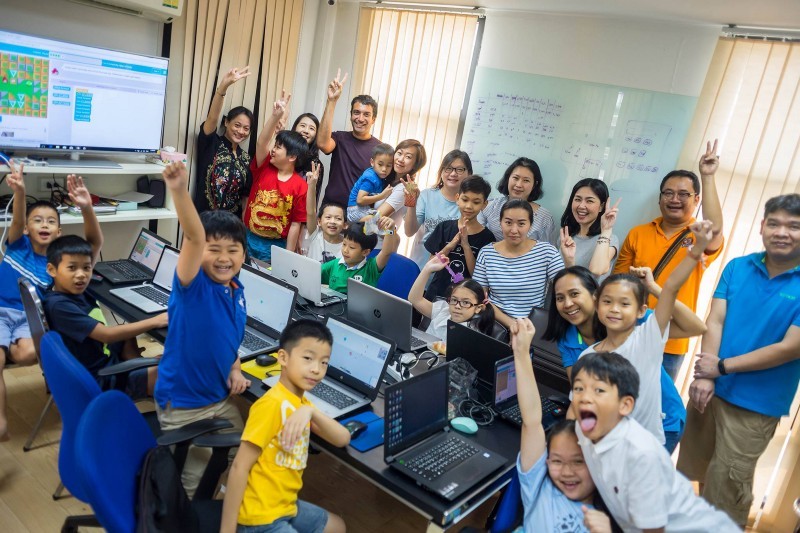
Coder Dojo at Maxile Co., Ltd. near Kasetsart University
Working with Doer
I have written for so long, so let me take the chance to sell something too.
From everything I have described, it is clear that in the near future, even if the Thai education system does not change after decades, and children continue learning the same old way—perhaps even worse—problems in the system will certainly be disrupted by technology.
Today, parents have alternatives that allow children to learn in new ways, with technologies and methods that make many things possible and easier.
Even if such learning is not in the formal curriculum and comes with no certificate, these skills will be in great demand in the future, and Doer will be a source of quality work ready for truly capable people to join our team.
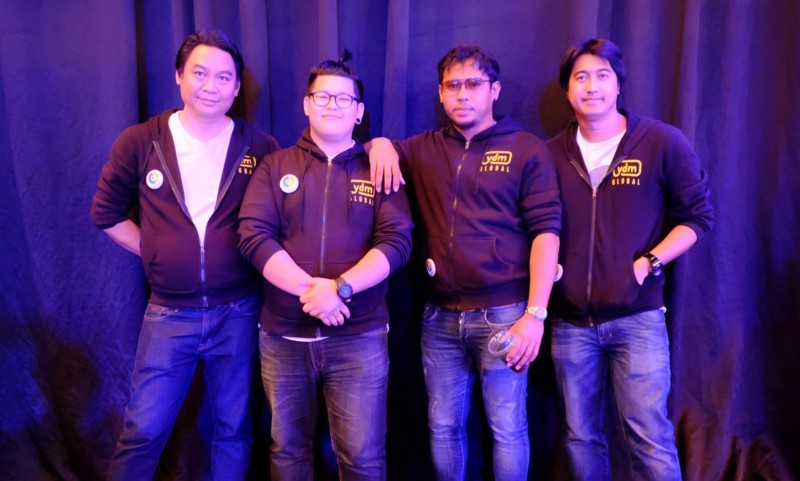

Come join our team—Doer, a quality freelance team that can work from anywhere..
I've been hearing complaints about the Thai education system for decades, ever since I was a hot-headed, irritable teenager who didn't know why I was studying this... Now, I understand what it's been like all along...
From childhood to adulthood, we wasted time learning many things we never used.
This is not Tee Lek (me) in his rebellious youth; it is an illustration from the internet.
I have heard complaints about the Thai education system for many years, ever since my hot-blooded youth when I was impatient, frustrated, and wondered why I had to study such things… until now, when I understand that all this time…
From childhood to adulthood, we have spent time studying many things that we never actually use.
I probably could have become many times better if I had spent that time learning what I truly wanted to learn. That is a strong way to begin, but the reason I have done well today is still because I had a good school foundation, with teachers and lecturers who patiently taught and pushed me from childhood through adulthood. But still…
Digital disruption is swallowing everything
It has already begun. Digital disruption is change driven by rapidly advancing technology, creating new business models and new ways of solving problems that would have been impossible before but are now very easy. Let me give some examples.
Things that are not good will definitely be changed
We have already been disrupted in many areas.
Do you remember how exhausted we used to be with unpredictable taxi services? Drivers refused rides, ran out of gas and went to refill, or simply drove away. If this had happened in the past, equipping every taxi with GPS, software, and continuous online connectivity would have required huge investment, so we tried to solve the issue through taxi radio centers instead.
But now every taxi driver has a mobile phone. Every taxi can be online anywhere. They can drive and watch movies at the same time, feeling completely relaxed. So now we can solve problems in new ways. GrabTaxi disrupted traditional taxis, Uber turned private cars into taxis, and LineMan turned motorcycle taxi riders into excellent delivery service providers. Sometimes I feel as if we have superpowers—we can summon a car. It is like calling the wind or rain.
We have superpowers—we can summon a car. Wow.
YouTube: a lifelong source of learning
“It is late already, you can put it down now… that iPad, you play with it all day, it might explode.”
I shouted to my mother before going upstairs to bed, partly out of concern and partly out of exasperation. Ever since I gave her my old iPad, she has sat watching YouTube all day without stopping.
“Well, there are so many interesting things on it. I have not even finished this teacher’s videos yet.”
My mother can spend all day listening to the things she wants to learn without getting tired—cooking, integrated agriculture, making EM fermented liquid, coconut oil, childcare, and so on. After learning, she becomes eager to try it all: cooking new dishes for the family, planting this and making that. None of it succeeds, of course, but it is still amusing. The one who gets tired is my father, because my mother keeps sending him out to buy things for her projects. I do not know how long she will keep watching all those clips, but I do know one thing for sure:
We are now ready to learn whatever we want, anywhere, throughout our lives.
And I also know that if you want your mother to stop complaining, try giving her your old iPad to play with.
This is an illustration from the internet, not my mother, but the feeling is something like this.
Khan Academy: an online school for the future world
Khan Academy is a non-profit organization whose goal is to provide high-quality education to people around the world—for free. It was founded by Salman Khan in 2006.
This is the person—remember the face; he will become very famous.
At first I thought it was simply a website that gathered a large number of educational videos so students of all levels and subjects could learn for free. But in reality, it is much more than that. The website divides learning into small lessons, and after each lesson there is a test. The principle is that if a student answers ten questions in a row correctly, that means they understand the topic and can move on to the next lesson.
You must answer 10 in a row correctly to pass
Teachers can also track students learning online to see how far each one has progressed. Green means they have passed, while red means there is a problem. So when a teacher sees a student struggling, the teacher can step in to help, or let another student who has already turned green help instead.
Khan speaking at TED Talk
Each child develops at a different pace. In a classroom where everyone must learn together, slower learners fall behind, while faster learners must wait for their friends, and learning becomes boring. From the development graph, we can see that at some point, someone who was slow at first can become the best by the end. We cannot judge a child as incapable simply because they do not understand at the beginning.
Khan’s learning system gives me hope for the future of Thai education. Children will be able to learn what interests them according to their own path.
And if we think about adult learning, there are many subjects we want to learn that have no textbook and no clear instruction, so we must search for them ourselves through various media—such as investing, parenting, mindset, management, and more. If a system like this existed, we could learn quickly and endlessly.
Read more about Khan Academy here.
What is Khan Academy? / Salman Khan predicts the shape of the education market in the next 10 years / Let’s use video to reinvent education
Home School: let’s study at home
I began looking for information about home schooling—legal ways for children to study at home—because my son is rather slow and cannot keep up with his classmates, which has caused many problems and made him start not wanting to go to school. Home schooling is an answer for children who cannot fit well into the regular education system. The more parents see school as merely a daytime childcare center, the more popular home schooling becomes.
The difficulty of home schooling is “the readiness of the parents,” because they must devote all of their time to teaching their child and preparing lessons each day. Parents who choose home schooling therefore need strong determination to do it for their child.
Home schooling can teach everything, not only academics
Home-schooled children discover themselves more quickly because parents organize teaching around the child’s interests. Home-schooled children tend to be eager to learn and develop self-learning skills, unlike children in the mainstream school system who wait for the teacher to teach them.
Since I first heard about home schooling until now, I have continued to hear success stories of home-schooled children—champions in e-sports, snooker, music, sports, and more. Therefore, I believe that
In the future, more and more parents will choose home schooling / Home-schooled children will be more capable and faster than children in regular schools
Coder Dojo: a coding school for young programmers
Home schooling can raise many questions, such as whether children who study at home will lack social interaction, close friends, or social skills, and many parents may not be capable enough to teach some subjects themselves.
Today, learning groups have started to emerge, called Dojos, meaning a school or training place. The goal is to bring together children who are interested in the same subject every week so they can learn together. I first heard about this from Khun Charee (Misari Mukbil), founder of CoderDojo Thailand, who dares to let children experiment.
“Ask three then me.” Ask three friends first, then ask the mentor.
A dojo is not a tutoring group or extra class. It is a collaborative learning group. The rules are simple: children must learn what interests them by themselves, ask their friends first if they have problems, and only ask the mentor if they truly cannot solve it. For parents and children from mainstream schools, it may feel strange because there is no teacher leading the class. But for home-schooled children, it is a very enjoyable place because everyone is interested in the same thing and helps each other solve problems.
A dojo is not limited only to programming. We can create many types of dojo for skill development, such as dance, singing, music, stocks, LEGO, and more.
Setting up a dojo is not difficult at all. We simply need:
Champion: someone who kindly provides the space, just a room with an area, seats, and Wi-Fi
Mentor: someone with knowledge in that field (not necessarily highly advanced) who can learn together with the children
Ninja: children who are interested and curious, plus a notebook computer
Then everyone meets weekly to exchange knowledge and learn together.
Coder Dojo at Maxile Co., Ltd. near Kasetsart University
Working with Doer
I have written for so long, so let me take the chance to sell something too.
From everything I have described, it is clear that in the near future, even if the Thai education system does not change after decades, and children continue learning the same old way—perhaps even worse—problems in the system will certainly be disrupted by technology.
Today, parents have alternatives that allow children to learn in new ways, with technologies and methods that make many things possible and easier.
Even if such learning is not in the formal curriculum and comes with no certificate, these skills will be in great demand in the future, and Doer will be a source of quality work ready for truly capable people to join our team.
Come join our team—Doer, a quality freelance team that can work from anywhere..
I've been hearing complaints about the Thai education system for decades, ever since I was a hot-headed, irritable teenager who didn't know why I was studying this... Now, I understand what it's been like all along...
From childhood to adulthood, we wasted time learning many things we never used.
This is not Tee Lek (me) in his rebellious youth; it is an illustration from the internet.
I have heard complaints about the Thai education system for many years, ever since my hot-blooded youth when I was impatient, frustrated, and wondered why I had to study such things… until now, when I understand that all this time…
From childhood to adulthood, we have spent time studying many things that we never actually use.
I probably could have become many times better if I had spent that time learning what I truly wanted to learn. That is a strong way to begin, but the reason I have done well today is still because I had a good school foundation, with teachers and lecturers who patiently taught and pushed me from childhood through adulthood. But still…
Digital disruption is swallowing everything
It has already begun. Digital disruption is change driven by rapidly advancing technology, creating new business models and new ways of solving problems that would have been impossible before but are now very easy. Let me give some examples.
Things that are not good will definitely be changed
We have already been disrupted in many areas.
Do you remember how exhausted we used to be with unpredictable taxi services? Drivers refused rides, ran out of gas and went to refill, or simply drove away. If this had happened in the past, equipping every taxi with GPS, software, and continuous online connectivity would have required huge investment, so we tried to solve the issue through taxi radio centers instead.
But now every taxi driver has a mobile phone. Every taxi can be online anywhere. They can drive and watch movies at the same time, feeling completely relaxed. So now we can solve problems in new ways. GrabTaxi disrupted traditional taxis, Uber turned private cars into taxis, and LineMan turned motorcycle taxi riders into excellent delivery service providers. Sometimes I feel as if we have superpowers—we can summon a car. It is like calling the wind or rain.
We have superpowers—we can summon a car. Wow.
YouTube: a lifelong source of learning
“It is late already, you can put it down now… that iPad, you play with it all day, it might explode.”
I shouted to my mother before going upstairs to bed, partly out of concern and partly out of exasperation. Ever since I gave her my old iPad, she has sat watching YouTube all day without stopping.
“Well, there are so many interesting things on it. I have not even finished this teacher’s videos yet.”
My mother can spend all day listening to the things she wants to learn without getting tired—cooking, integrated agriculture, making EM fermented liquid, coconut oil, childcare, and so on. After learning, she becomes eager to try it all: cooking new dishes for the family, planting this and making that. None of it succeeds, of course, but it is still amusing. The one who gets tired is my father, because my mother keeps sending him out to buy things for her projects. I do not know how long she will keep watching all those clips, but I do know one thing for sure:
We are now ready to learn whatever we want, anywhere, throughout our lives.
And I also know that if you want your mother to stop complaining, try giving her your old iPad to play with.
This is an illustration from the internet, not my mother, but the feeling is something like this.
Khan Academy: an online school for the future world
Khan Academy is a non-profit organization whose goal is to provide high-quality education to people around the world—for free. It was founded by Salman Khan in 2006.
This is the person—remember the face; he will become very famous.
At first I thought it was simply a website that gathered a large number of educational videos so students of all levels and subjects could learn for free. But in reality, it is much more than that. The website divides learning into small lessons, and after each lesson there is a test. The principle is that if a student answers ten questions in a row correctly, that means they understand the topic and can move on to the next lesson.
You must answer 10 in a row correctly to pass
Teachers can also track students learning online to see how far each one has progressed. Green means they have passed, while red means there is a problem. So when a teacher sees a student struggling, the teacher can step in to help, or let another student who has already turned green help instead.
Khan speaking at TED Talk
Each child develops at a different pace. In a classroom where everyone must learn together, slower learners fall behind, while faster learners must wait for their friends, and learning becomes boring. From the development graph, we can see that at some point, someone who was slow at first can become the best by the end. We cannot judge a child as incapable simply because they do not understand at the beginning.
Khan’s learning system gives me hope for the future of Thai education. Children will be able to learn what interests them according to their own path.
And if we think about adult learning, there are many subjects we want to learn that have no textbook and no clear instruction, so we must search for them ourselves through various media—such as investing, parenting, mindset, management, and more. If a system like this existed, we could learn quickly and endlessly.
Read more about Khan Academy here.
What is Khan Academy? / Salman Khan predicts the shape of the education market in the next 10 years / Let’s use video to reinvent education
Home School: let’s study at home
I began looking for information about home schooling—legal ways for children to study at home—because my son is rather slow and cannot keep up with his classmates, which has caused many problems and made him start not wanting to go to school. Home schooling is an answer for children who cannot fit well into the regular education system. The more parents see school as merely a daytime childcare center, the more popular home schooling becomes.
The difficulty of home schooling is “the readiness of the parents,” because they must devote all of their time to teaching their child and preparing lessons each day. Parents who choose home schooling therefore need strong determination to do it for their child.
Home schooling can teach everything, not only academics
Home-schooled children discover themselves more quickly because parents organize teaching around the child’s interests. Home-schooled children tend to be eager to learn and develop self-learning skills, unlike children in the mainstream school system who wait for the teacher to teach them.
Since I first heard about home schooling until now, I have continued to hear success stories of home-schooled children—champions in e-sports, snooker, music, sports, and more. Therefore, I believe that
In the future, more and more parents will choose home schooling / Home-schooled children will be more capable and faster than children in regular schools
Coder Dojo: a coding school for young programmers
Home schooling can raise many questions, such as whether children who study at home will lack social interaction, close friends, or social skills, and many parents may not be capable enough to teach some subjects themselves.
Today, learning groups have started to emerge, called Dojos, meaning a school or training place. The goal is to bring together children who are interested in the same subject every week so they can learn together. I first heard about this from Khun Charee (Misari Mukbil), founder of CoderDojo Thailand, who dares to let children experiment.
“Ask three then me.” Ask three friends first, then ask the mentor.
A dojo is not a tutoring group or extra class. It is a collaborative learning group. The rules are simple: children must learn what interests them by themselves, ask their friends first if they have problems, and only ask the mentor if they truly cannot solve it. For parents and children from mainstream schools, it may feel strange because there is no teacher leading the class. But for home-schooled children, it is a very enjoyable place because everyone is interested in the same thing and helps each other solve problems.
A dojo is not limited only to programming. We can create many types of dojo for skill development, such as dance, singing, music, stocks, LEGO, and more.
Setting up a dojo is not difficult at all. We simply need:
Champion: someone who kindly provides the space, just a room with an area, seats, and Wi-Fi
Mentor: someone with knowledge in that field (not necessarily highly advanced) who can learn together with the children
Ninja: children who are interested and curious, plus a notebook computer
Then everyone meets weekly to exchange knowledge and learn together.
Coder Dojo at Maxile Co., Ltd. near Kasetsart University
Working with Doer
I have written for so long, so let me take the chance to sell something too.
From everything I have described, it is clear that in the near future, even if the Thai education system does not change after decades, and children continue learning the same old way—perhaps even worse—problems in the system will certainly be disrupted by technology.
Today, parents have alternatives that allow children to learn in new ways, with technologies and methods that make many things possible and easier.
Even if such learning is not in the formal curriculum and comes with no certificate, these skills will be in great demand in the future, and Doer will be a source of quality work ready for truly capable people to join our team.
Come join our team—Doer, a quality freelance team that can work from anywhere..
[
Connect
]
How can we help you innovate?
Drop us a line.
Get in
touch
[
Connect
]
How can we help you innovate?
Drop us a line.
Get in
touch
[
Connect
]
How can we help you innovate?
Drop us a line.
Get in
touch
Related
Movements.
{
News
}
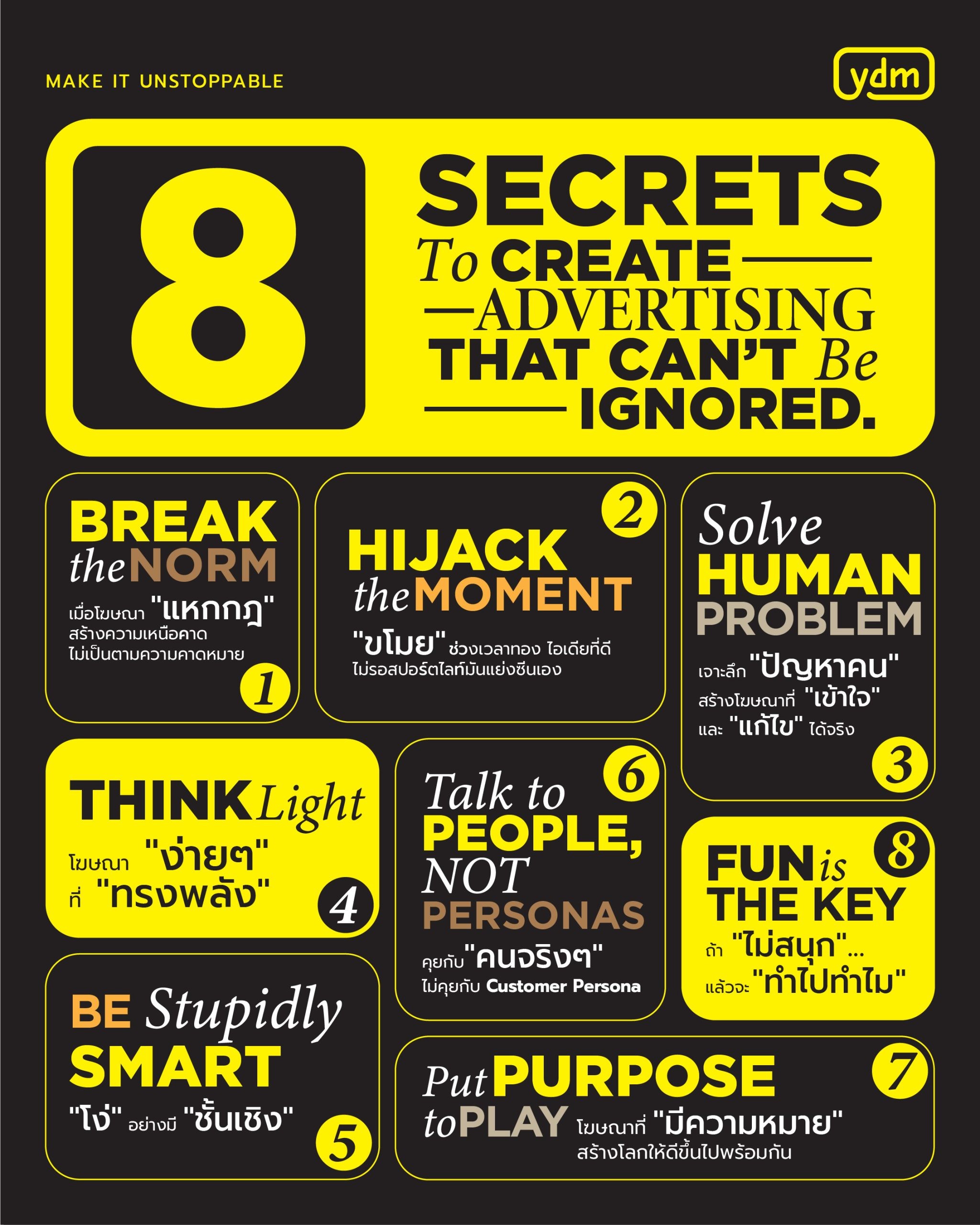
Unlocking the Secret: 8 Keys to Creating Impactful Advertising Campaigns
Jan 15, 2025
{
News
}
Unlocking the Secret: 8 Keys to Creating Impactful Advertising Campaigns
Jan 15, 2025
{
News
}
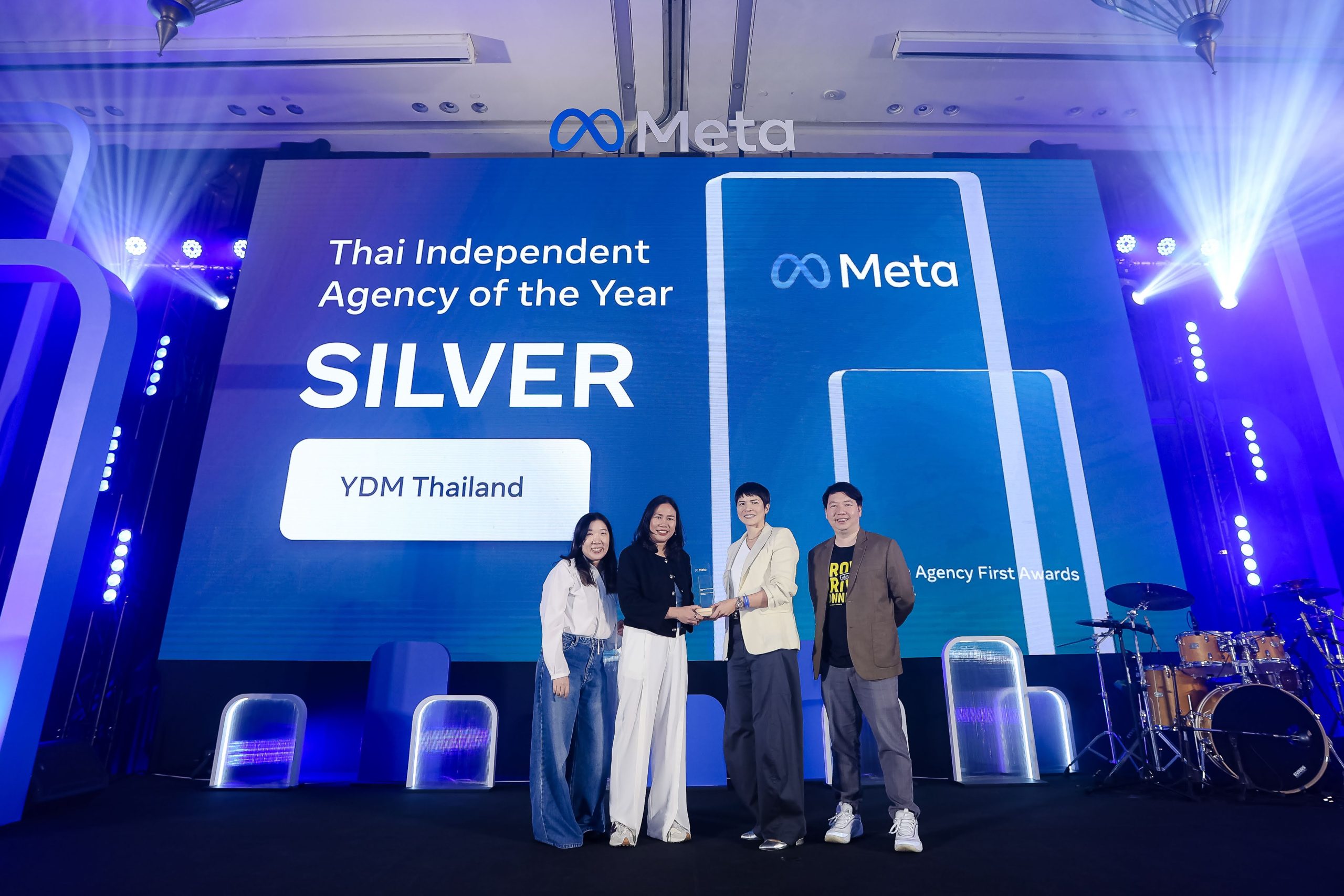
YDM Makes Waves with Double Wins at Meta Awards, Reveals Key Drivers Behind Its Success
Dec 24, 2024
{
News
}
YDM Makes Waves with Double Wins at Meta Awards, Reveals Key Drivers Behind Its Success
Dec 24, 2024
{
News
}
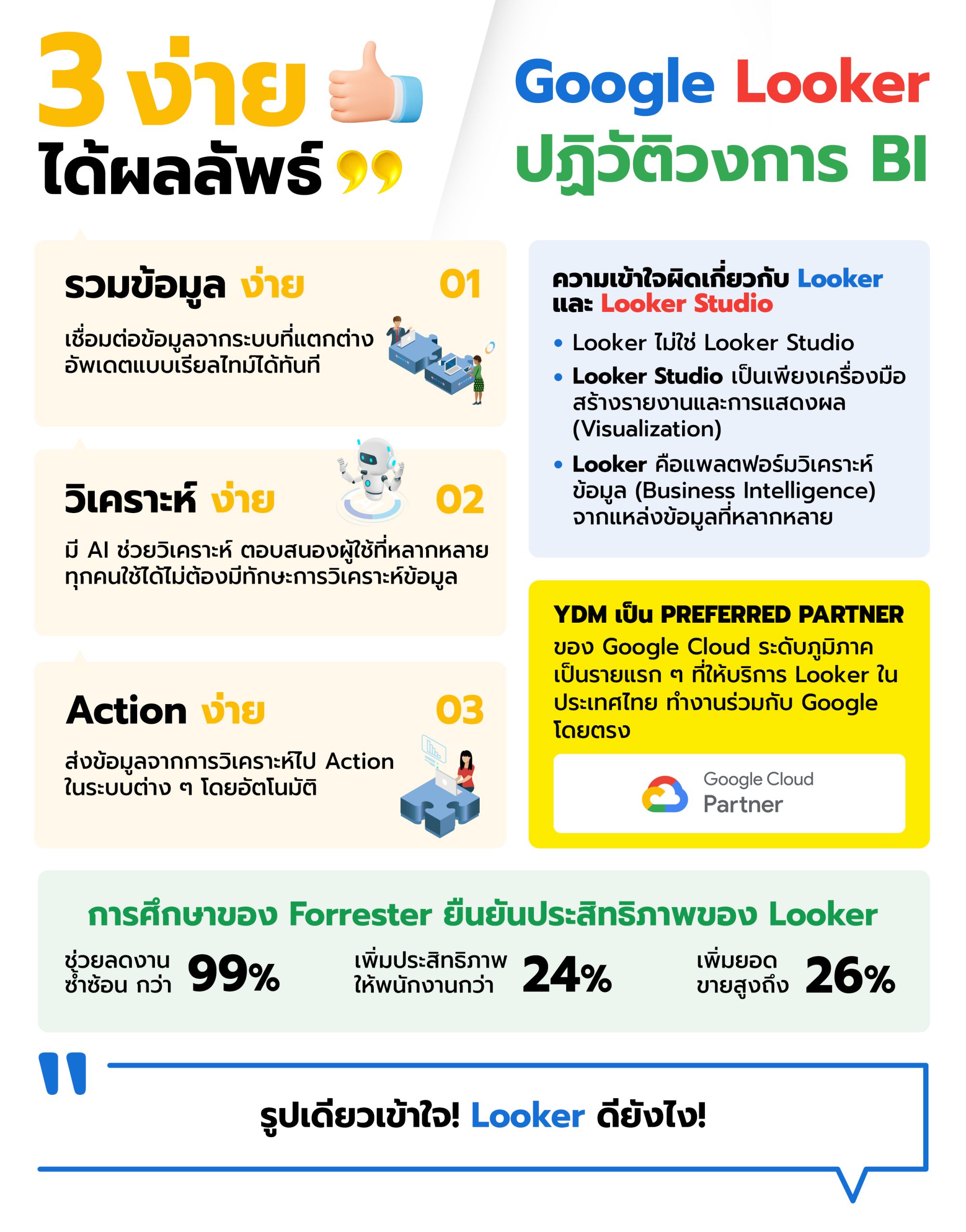
YDM Transforms the BI Landscape with Looker: Making Data “Simple” and More Effective (Looker is not Looker Studio)
Dec 17, 2024
{
News
}
YDM Transforms the BI Landscape with Looker: Making Data “Simple” and More Effective (Looker is not Looker Studio)
Dec 17, 2024
{
News
}
Unlocking the Secret: 8 Keys to Creating Impactful Advertising Campaigns
Jan 15, 2025
{
News
}
YDM Makes Waves with Double Wins at Meta Awards, Reveals Key Drivers Behind Its Success
Dec 24, 2024
{
News
}
YDM Transforms the BI Landscape with Looker: Making Data “Simple” and More Effective (Looker is not Looker Studio)
Dec 17, 2024
{
News
}
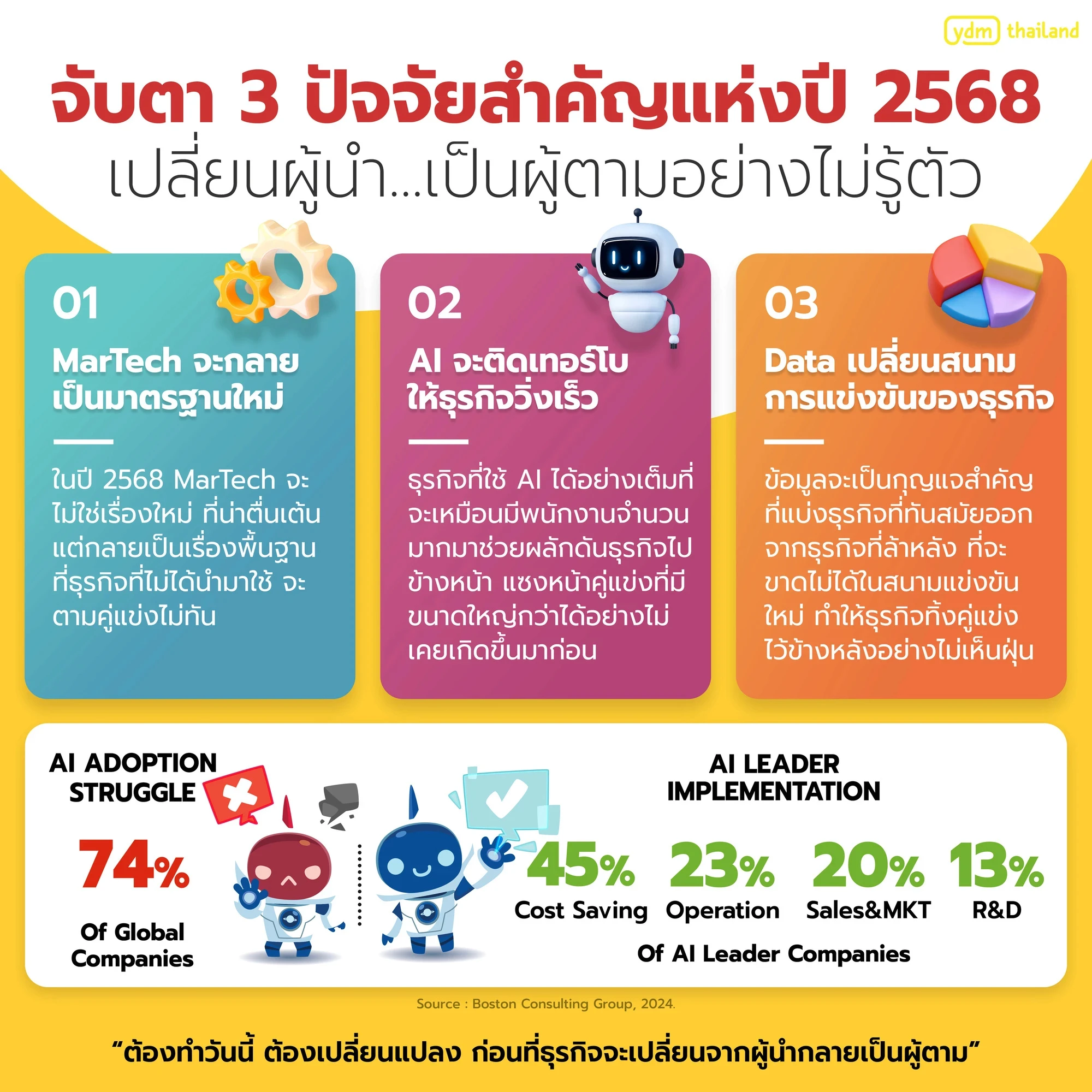
Watch Out: 3 Key Factors in 2025 That Could Turn Leaders into Followers Without Realizing It
Dec 3, 2024
{
News
}
Unlocking the Secret: 8 Keys to Creating Impactful Advertising Campaigns
Jan 15, 2025
{
News
}
YDM Makes Waves with Double Wins at Meta Awards, Reveals Key Drivers Behind Its Success
Dec 24, 2024
{
News
}
YDM Transforms the BI Landscape with Looker: Making Data “Simple” and More Effective (Looker is not Looker Studio)
Dec 17, 2024
{
News
}
Watch Out: 3 Key Factors in 2025 That Could Turn Leaders into Followers Without Realizing It
Dec 3, 2024