
“Tanapon Subsomboon,” CEO of Adyim, said that entering the Chinese market is not easy and businesses should not rely on only one platform, but should instead use a mixed strategy. Most recently, the company joined hands with Chinese digital marketing firm Adsventure Group to launch the joint venture AVG Thailand, highlighting its readiness as an Authorized Partner of major Chinese digital media platforms such as Weibo, WeChat, Baidu, and Alibaba. The company expects to take Thai businesses further than before and has set a revenue target of 100 million baht in 2018.
“First of all, regarding the question of why China, there are several reasons. The first is that China has a population of 1.4 billion people, making it a very large market. Second, China is developing and growing rapidly, and we are beginning to see the trend that China will soon overtake the United States as the world leader in terms of the economy. Third, China has a very high number of internet users, around 700 million people, or half of the country’s population. Fourth, modern Chinese consumers behave completely differently from those in the past. Chinese people today are ready to spend. If they earn more, they are ready to spend more, unlike their parents’ generation, which focused on saving,” said Tanapon Subsomboon, CEO of Adyim, adding that
“The final reason is that Chinese people like to travel to Thailand. Chinese consumers look for products carrying the Made in Thailand label.”
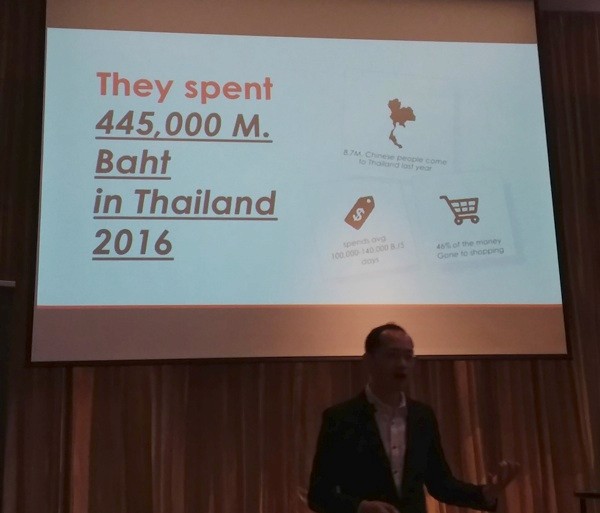
From the above reasons, many companies may see entering China as a bright opportunity. However, Mr. Tanapon pointed out that within this promise lie five challenges that people who have never entered the Chinese market would never know:
It is an extremely large market
Cultural differences
Language limitations
Intellectual property infringement issues
Digital know-how
These five challenges may require brands to make major adjustments, because a campaign that succeeds in Thailand will not necessarily succeed in China. Brands may need to adjust the formula or packaging to suit the target audience. In logistics, for example, Chinese e-commerce can deliver goods ordered in the morning by the afternoon, and this may be an area where Thai businesses still lack management know-how.
“It is not enough just to buy media, buy Baidu, buy WeChat, and be done with it. We also need digital know-how.”
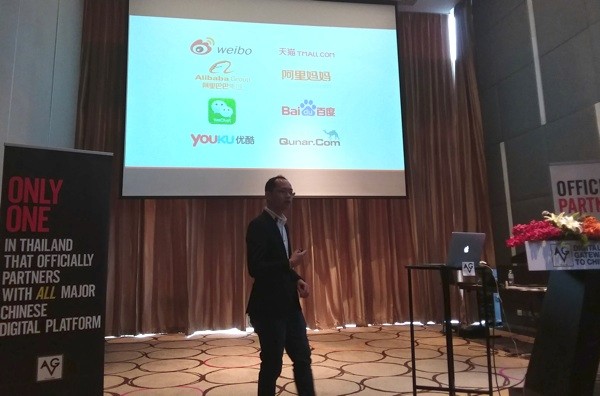
“The tools used for digital marketing in China are different from those in Thailand because most major foreign digital tools, whether Line, Google, Facebook, or YouTube, cannot be used. Popular digital tools in China include Baidu, which is used to search for information instead of Google. Baidu itself has a keyword planner system just like Google, allowing us to know immediately what Chinese people search for in Thailand. Most of the time, Chinese users search for hotel information, tourist attractions, and souvenir information. Chinese people who like social media use Weibo in the same way Facebook is used, and they chat with friends through WeChat, which can be compared with Line. WeChat’s advertising system is more advanced than Line’s because it offers more features and can integrate applications directly into the WeChat system. It can be used for games, reservation systems, or e-commerce systems,” said the Adyim CEO.
Regarding current digital marketing trends in China, Mr. Tanapon said that China’s e-commerce sector has expanded tremendously and is among the fastest-growing in the world. In 2017 it reached US$812 billion (about 27 trillion baht). E-commerce accounted for 17% of total retail sales nationwide, and department stores in China have begun facing the same problem as those in the United States: gradually closing physical stores in malls and moving to online sales or advertising on major e-commerce platforms such as Tmall and Taobao.
“Online marketing in China requires integrating multiple digital tools together for maximum effectiveness, and businesses must understand the customer journey of Chinese consumers for each product or service. For example, in the tourism business, if you want Chinese travelers to stay at your hotel or buy your souvenirs, you must plan for them to know your brand while they are still in China. We may need to buy keywords on Baidu so Chinese users can find information about our hotel or products in Chinese. Then, when Chinese travelers arrive in Thailand, they usually buy and switch SIM cards, so we can send SMS messages to Chinese travelers in Thailand, such as attractive promotions or welcome messages. During their stay in Thailand, we may also advertise on WeChat or Weibo and think about strategies to encourage them to post photos of the hotel or products they buy, which would also generate free PR.”
Mr. Li Xiao Jun, CEO of AVG Co., Ltd., said that AVG has the largest media planning platform in China, covering both online and offline media. It has nine affiliated companies across Southeast Asia and Asia-Pacific, including China, Singapore, Malaysia, Cambodia, and Vietnam.
In China, AVG is a Premier Partner of all major Chinese digital media networks, such as Baidu, Alibaba, WeChat, Weibo, and Youku. It also has connections with China’s top influencers who can help build brands and promote products and services in China, along with specialist teams that help plan the most suitable integrated media mix for each client’s business, enabling clients to build their brands and penetrate the Chinese market more comprehensively.

Mr. Tanapon Subsomboon
“Why is China such an important target for products and services from Thailand? Because over the past five years, Thailand has ranked number one among Chinese tourists and the trend is expected to keep rising. Chinese people love Thailand for its shopping, food, and culture. At the same time, the number of A-list Chinese consumers, or those with strong spending potential, continues to increase, and they are our target group.”
“In addition, China is building a high-speed rail network that will cover all economic zones, reducing transport costs and making logistics between Thailand and China more convenient. Ultimately, Tmall and Alibaba, the giant Chinese e-commerce platforms, will become convenient and widely used channels for bringing Thai products to the Chinese market,” the AVG CEO concluded.
Thank you
Source: thumbsup website
“Tanapon Subsomboon,” CEO of Adyim, said that entering the Chinese market is not easy and businesses should not rely on only one platform, but should instead use a mixed strategy. Most recently, the company joined hands with Chinese digital marketing firm Adsventure Group to launch the joint venture AVG Thailand, highlighting its readiness as an Authorized Partner of major Chinese digital media platforms such as Weibo, WeChat, Baidu, and Alibaba. The company expects to take Thai businesses further than before and has set a revenue target of 100 million baht in 2018.
“First of all, regarding the question of why China, there are several reasons. The first is that China has a population of 1.4 billion people, making it a very large market. Second, China is developing and growing rapidly, and we are beginning to see the trend that China will soon overtake the United States as the world leader in terms of the economy. Third, China has a very high number of internet users, around 700 million people, or half of the country’s population. Fourth, modern Chinese consumers behave completely differently from those in the past. Chinese people today are ready to spend. If they earn more, they are ready to spend more, unlike their parents’ generation, which focused on saving,” said Tanapon Subsomboon, CEO of Adyim, adding that
“The final reason is that Chinese people like to travel to Thailand. Chinese consumers look for products carrying the Made in Thailand label.”
From the above reasons, many companies may see entering China as a bright opportunity. However, Mr. Tanapon pointed out that within this promise lie five challenges that people who have never entered the Chinese market would never know:
It is an extremely large market
Cultural differences
Language limitations
Intellectual property infringement issues
Digital know-how
These five challenges may require brands to make major adjustments, because a campaign that succeeds in Thailand will not necessarily succeed in China. Brands may need to adjust the formula or packaging to suit the target audience. In logistics, for example, Chinese e-commerce can deliver goods ordered in the morning by the afternoon, and this may be an area where Thai businesses still lack management know-how.
“It is not enough just to buy media, buy Baidu, buy WeChat, and be done with it. We also need digital know-how.”
“The tools used for digital marketing in China are different from those in Thailand because most major foreign digital tools, whether Line, Google, Facebook, or YouTube, cannot be used. Popular digital tools in China include Baidu, which is used to search for information instead of Google. Baidu itself has a keyword planner system just like Google, allowing us to know immediately what Chinese people search for in Thailand. Most of the time, Chinese users search for hotel information, tourist attractions, and souvenir information. Chinese people who like social media use Weibo in the same way Facebook is used, and they chat with friends through WeChat, which can be compared with Line. WeChat’s advertising system is more advanced than Line’s because it offers more features and can integrate applications directly into the WeChat system. It can be used for games, reservation systems, or e-commerce systems,” said the Adyim CEO.
Regarding current digital marketing trends in China, Mr. Tanapon said that China’s e-commerce sector has expanded tremendously and is among the fastest-growing in the world. In 2017 it reached US$812 billion (about 27 trillion baht). E-commerce accounted for 17% of total retail sales nationwide, and department stores in China have begun facing the same problem as those in the United States: gradually closing physical stores in malls and moving to online sales or advertising on major e-commerce platforms such as Tmall and Taobao.
“Online marketing in China requires integrating multiple digital tools together for maximum effectiveness, and businesses must understand the customer journey of Chinese consumers for each product or service. For example, in the tourism business, if you want Chinese travelers to stay at your hotel or buy your souvenirs, you must plan for them to know your brand while they are still in China. We may need to buy keywords on Baidu so Chinese users can find information about our hotel or products in Chinese. Then, when Chinese travelers arrive in Thailand, they usually buy and switch SIM cards, so we can send SMS messages to Chinese travelers in Thailand, such as attractive promotions or welcome messages. During their stay in Thailand, we may also advertise on WeChat or Weibo and think about strategies to encourage them to post photos of the hotel or products they buy, which would also generate free PR.”
Mr. Li Xiao Jun, CEO of AVG Co., Ltd., said that AVG has the largest media planning platform in China, covering both online and offline media. It has nine affiliated companies across Southeast Asia and Asia-Pacific, including China, Singapore, Malaysia, Cambodia, and Vietnam.
In China, AVG is a Premier Partner of all major Chinese digital media networks, such as Baidu, Alibaba, WeChat, Weibo, and Youku. It also has connections with China’s top influencers who can help build brands and promote products and services in China, along with specialist teams that help plan the most suitable integrated media mix for each client’s business, enabling clients to build their brands and penetrate the Chinese market more comprehensively.
Mr. Tanapon Subsomboon
“Why is China such an important target for products and services from Thailand? Because over the past five years, Thailand has ranked number one among Chinese tourists and the trend is expected to keep rising. Chinese people love Thailand for its shopping, food, and culture. At the same time, the number of A-list Chinese consumers, or those with strong spending potential, continues to increase, and they are our target group.”
“In addition, China is building a high-speed rail network that will cover all economic zones, reducing transport costs and making logistics between Thailand and China more convenient. Ultimately, Tmall and Alibaba, the giant Chinese e-commerce platforms, will become convenient and widely used channels for bringing Thai products to the Chinese market,” the AVG CEO concluded.
Thank you
Source: thumbsup website
“Tanapon Subsomboon,” CEO of Adyim, said that entering the Chinese market is not easy and businesses should not rely on only one platform, but should instead use a mixed strategy. Most recently, the company joined hands with Chinese digital marketing firm Adsventure Group to launch the joint venture AVG Thailand, highlighting its readiness as an Authorized Partner of major Chinese digital media platforms such as Weibo, WeChat, Baidu, and Alibaba. The company expects to take Thai businesses further than before and has set a revenue target of 100 million baht in 2018.
“First of all, regarding the question of why China, there are several reasons. The first is that China has a population of 1.4 billion people, making it a very large market. Second, China is developing and growing rapidly, and we are beginning to see the trend that China will soon overtake the United States as the world leader in terms of the economy. Third, China has a very high number of internet users, around 700 million people, or half of the country’s population. Fourth, modern Chinese consumers behave completely differently from those in the past. Chinese people today are ready to spend. If they earn more, they are ready to spend more, unlike their parents’ generation, which focused on saving,” said Tanapon Subsomboon, CEO of Adyim, adding that
“The final reason is that Chinese people like to travel to Thailand. Chinese consumers look for products carrying the Made in Thailand label.”
From the above reasons, many companies may see entering China as a bright opportunity. However, Mr. Tanapon pointed out that within this promise lie five challenges that people who have never entered the Chinese market would never know:
It is an extremely large market
Cultural differences
Language limitations
Intellectual property infringement issues
Digital know-how
These five challenges may require brands to make major adjustments, because a campaign that succeeds in Thailand will not necessarily succeed in China. Brands may need to adjust the formula or packaging to suit the target audience. In logistics, for example, Chinese e-commerce can deliver goods ordered in the morning by the afternoon, and this may be an area where Thai businesses still lack management know-how.
“It is not enough just to buy media, buy Baidu, buy WeChat, and be done with it. We also need digital know-how.”
“The tools used for digital marketing in China are different from those in Thailand because most major foreign digital tools, whether Line, Google, Facebook, or YouTube, cannot be used. Popular digital tools in China include Baidu, which is used to search for information instead of Google. Baidu itself has a keyword planner system just like Google, allowing us to know immediately what Chinese people search for in Thailand. Most of the time, Chinese users search for hotel information, tourist attractions, and souvenir information. Chinese people who like social media use Weibo in the same way Facebook is used, and they chat with friends through WeChat, which can be compared with Line. WeChat’s advertising system is more advanced than Line’s because it offers more features and can integrate applications directly into the WeChat system. It can be used for games, reservation systems, or e-commerce systems,” said the Adyim CEO.
Regarding current digital marketing trends in China, Mr. Tanapon said that China’s e-commerce sector has expanded tremendously and is among the fastest-growing in the world. In 2017 it reached US$812 billion (about 27 trillion baht). E-commerce accounted for 17% of total retail sales nationwide, and department stores in China have begun facing the same problem as those in the United States: gradually closing physical stores in malls and moving to online sales or advertising on major e-commerce platforms such as Tmall and Taobao.
“Online marketing in China requires integrating multiple digital tools together for maximum effectiveness, and businesses must understand the customer journey of Chinese consumers for each product or service. For example, in the tourism business, if you want Chinese travelers to stay at your hotel or buy your souvenirs, you must plan for them to know your brand while they are still in China. We may need to buy keywords on Baidu so Chinese users can find information about our hotel or products in Chinese. Then, when Chinese travelers arrive in Thailand, they usually buy and switch SIM cards, so we can send SMS messages to Chinese travelers in Thailand, such as attractive promotions or welcome messages. During their stay in Thailand, we may also advertise on WeChat or Weibo and think about strategies to encourage them to post photos of the hotel or products they buy, which would also generate free PR.”
Mr. Li Xiao Jun, CEO of AVG Co., Ltd., said that AVG has the largest media planning platform in China, covering both online and offline media. It has nine affiliated companies across Southeast Asia and Asia-Pacific, including China, Singapore, Malaysia, Cambodia, and Vietnam.
In China, AVG is a Premier Partner of all major Chinese digital media networks, such as Baidu, Alibaba, WeChat, Weibo, and Youku. It also has connections with China’s top influencers who can help build brands and promote products and services in China, along with specialist teams that help plan the most suitable integrated media mix for each client’s business, enabling clients to build their brands and penetrate the Chinese market more comprehensively.
Mr. Tanapon Subsomboon
“Why is China such an important target for products and services from Thailand? Because over the past five years, Thailand has ranked number one among Chinese tourists and the trend is expected to keep rising. Chinese people love Thailand for its shopping, food, and culture. At the same time, the number of A-list Chinese consumers, or those with strong spending potential, continues to increase, and they are our target group.”
“In addition, China is building a high-speed rail network that will cover all economic zones, reducing transport costs and making logistics between Thailand and China more convenient. Ultimately, Tmall and Alibaba, the giant Chinese e-commerce platforms, will become convenient and widely used channels for bringing Thai products to the Chinese market,” the AVG CEO concluded.
Thank you
Source: thumbsup website
[
Connect
]
How can we help you innovate?
Drop us a line.
Get in
touch
[
Connect
]
How can we help you innovate?
Drop us a line.
Get in
touch
[
Connect
]
How can we help you innovate?
Drop us a line.
Get in
touch
Related
Movements.

{
News
}
Unlocking the Secret: 8 Keys to Creating Impactful Advertising Campaigns
Jan 15, 2025
{
News
}
Unlocking the Secret: 8 Keys to Creating Impactful Advertising Campaigns
Jan 15, 2025

{
News
}
YDM Makes Waves with Double Wins at Meta Awards, Reveals Key Drivers Behind Its Success
Dec 24, 2024
{
News
}
YDM Makes Waves with Double Wins at Meta Awards, Reveals Key Drivers Behind Its Success
Dec 24, 2024
{
News
}
YDM Transforms the BI Landscape with Looker: Making Data “Simple” and More Effective (Looker is not Looker Studio)
Dec 17, 2024
{
News
}
YDM Transforms the BI Landscape with Looker: Making Data “Simple” and More Effective (Looker is not Looker Studio)
Dec 17, 2024
{
News
}
Unlocking the Secret: 8 Keys to Creating Impactful Advertising Campaigns
Jan 15, 2025
{
News
}
YDM Makes Waves with Double Wins at Meta Awards, Reveals Key Drivers Behind Its Success
Dec 24, 2024
{
News
}
YDM Transforms the BI Landscape with Looker: Making Data “Simple” and More Effective (Looker is not Looker Studio)
Dec 17, 2024
{
News
}
Watch Out: 3 Key Factors in 2025 That Could Turn Leaders into Followers Without Realizing It
Dec 3, 2024
{
News
}
Unlocking the Secret: 8 Keys to Creating Impactful Advertising Campaigns
Jan 15, 2025
{
News
}
YDM Makes Waves with Double Wins at Meta Awards, Reveals Key Drivers Behind Its Success
Dec 24, 2024
{
News
}
YDM Transforms the BI Landscape with Looker: Making Data “Simple” and More Effective (Looker is not Looker Studio)
Dec 17, 2024
{
News
}
Watch Out: 3 Key Factors in 2025 That Could Turn Leaders into Followers Without Realizing It
Dec 3, 2024