
This article reveals 7 trends to watch in the digital marketing industry, pointing out that competition will become more intense. Brands continue to place importance on digital marketing through popular platforms such as Facebook, Google, and YouTube, which still see overwhelming demand. This is driving advertising costs upward, in contrast to the continuing slowdown of the global economy and increasingly cautious consumer spending.
Mr. Tanapon Subsomboon, Chief Executive Officer of YDM (Thailand) Co., Ltd. and a digital marketing expert with more than 10 years of experience, known by the nickname “Zhou Bug Tong,” said that the digital marketing industry in 2020 is very different from the past. While technology had transformed marketing in Thailand successfully several years ago, the current digital marketing landscape has changed, with many more challenges flowing in for marketers to handle.

“Marketers in 2020 will face pressure from many directions, including a large number of both Thai and foreign players competing in the online market. This has pushed up online advertising costs and led to more rigorous performance measurement, which has ultimately become a burden that Thai marketers must bear,” Mr. Tanapon said.
In addition, the CEO of YDM Thailand analyzed the “7 directions of digital marketing in Thailand in 2020” as another tool to help Thai marketers identify new opportunities for competition more effectively.

**Data Seems to Be Coming, But Has Not Fully Arrived Yet
Data may be something that has been widely discussed in the digital marketing industry recently, whether in Personalized Marketing, the use of data for research to discover customer insights, and many other applications. However, what YDM Thailand has found through direct experience with Thai businesses is that only a few industries are able to prepare data comprehensively and systematically. Examples include telecommunications, financial institutions, and e-commerce businesses.
Meanwhile, the consumer goods sector still lacks readiness in most cases because businesses in this category rely on partner stores as their distribution channels, making it impossible to collect one-to-one transaction data from customers. Even where this can be done, it is usually only partial through CRM systems created by the companies themselves, which is still very limited compared with the total customer base that should ideally be covered.
“When this is combined with the shortage of data personnel in Thailand, as well as the relatively small number of marketers and advertisers who truly understand data work, the use of data to create marketing campaigns in Thailand may occur only among large brands that are already prepared in terms of data. Those who still do not have data, or who are only beginning to collect data this year, will be at a considerable disadvantage,” Mr. Tanapon said.

**Consumer Goods Will Drive E-commerce Growth
“We have found that the e-commerce industry has grown continuously for many years due to competition among major players such as Lazada, Shopee, JD Central, and others. But if we look carefully, we can see that e-commerce in the consumer goods category, such as soap, toothpaste, detergent, and similar items, has grown relatively little compared with other categories. This is because convenience stores are everywhere in Thailand, so people tend to go out and buy consumer goods themselves rather than purchase them through e-commerce channels.”
However, in 2020, one important policy has been introduced: stores, especially hypermarkets, are no longer distributing plastic bags. This has reduced convenience for consumers when shopping. As a result, consumers may turn to purchasing consumer goods through e-commerce channels instead. In addition, logistics systems in Thailand have improved significantly in convenience and speed. This year may therefore see rapid growth in consumer goods on e-commerce platforms, putting hypermarkets in a difficult position.

**Digital Media Prices Will Rise Significantly
“Until now, digital media advertising in Thailand has been dominated by only two foreign giants, Google and Facebook, both of which use real-time bidding auction systems. The strength of such systems is that the more advertisers there are, the higher the competition and the more expensive the advertising becomes,” Mr. Tanapon said.
When these factors are combined with conditions such as the economic slowdown, rising unemployment causing more people to sell online, and the entry of small Chinese entrepreneurs through e-commerce channels, the result follows basic economic principles: advertising space is limited, the number of internet users is beginning to stabilize, but the number of advertisers is increasing. It is therefore not surprising that digital media advertising costs in 2020 may reach a record high.

**A Blended Use of Influencers Will Increase (Data Selection of Multi-Tier Influencers)
2019 was a golden year for influencers, attracting strong interest from many brands. Both large influencers with substantial follower bases and smaller influencers, known as micro influencers, benefited from this trend.
“Based on YDM Thailand’s influencer database of more than 100,000 people across Thailand, we expect that in 2020 brands will continue spending heavily on influencers. However, as digital media costs continue to rise significantly, brands may need to be more strategic in how they use influencers, such as combining Macro, Micro, and Nano Influencers and incorporating different types of influencer data into their decision-making,” the CEO of YDM Thailand advised.

**Large Brands Will Begin Transforming into Publishers
“From our previous work in data marketing, we have found that large brands increasingly want more data, especially data on target audiences before they have a need for the brand’s products, known as pre-purchase behavior data. In most cases, this type of data is obtained through consumer content on websites, which is difficult work, requires high investment, and whose benefits are still not very tangible.”
However, in 2020 several factors indicate that brands will invest more in this area, including technology that is more ready and accessible, Google’s announcement that it will stop supporting cookies on Chrome, and the large number of content creators in the market. It is believed that one group of content creators will increasingly turn to creating content for brands rather than creating content to attract advertising revenue as in the past.
“In 2020, we are likely to begin seeing some large brands transform into publishers by creating small content websites with the main objective of collecting behavior data,” Mr. Tanapon said.

**Niche Markets Will Become an Important Market for Brands
From many years of experience, it is believed that brands have begun to learn that digital media is not a mass communication medium in the same way as traditional media in the past. Although digital media can now reach most of the country’s population, people in the digital world have many content choices and therefore choose to consume only the content they like.
“For this reason, brand communication has shifted toward more specific target groups, or niche markets. For example, Nivea carried out music marketing by producing the music video ‘Sorn Klin’ by the artist Palmy to appeal to urban audiences, while also producing the music video ‘Dai Jai Ai Nai 7 Wan’ featuring Lamyai Haithongkham to appeal to audiences in the Northeastern region.”

**One BIG Idea Advertising Will Become Less Common
Brand communication on digital platforms is becoming increasingly complex because it requires both creative and technology to succeed. As a result, some brands are slowing down brand communication in the form of advertising and are instead focusing more on experience or creating a good experience for consumers. The belief is that if a brand can create a good experience for consumers, consumers themselves will become the voice promoting the brand.
“Because of this change, we believe that high-budget brand films for digital media built around one big idea will become fewer. Brands are more likely to produce many smaller videos instead, with different messages tailored to different segments or chosen niche markets, because this is more cost-effective and delivers better results.”
This article reveals 7 trends to watch in the digital marketing industry, pointing out that competition will become more intense. Brands continue to place importance on digital marketing through popular platforms such as Facebook, Google, and YouTube, which still see overwhelming demand. This is driving advertising costs upward, in contrast to the continuing slowdown of the global economy and increasingly cautious consumer spending.
Mr. Tanapon Subsomboon, Chief Executive Officer of YDM (Thailand) Co., Ltd. and a digital marketing expert with more than 10 years of experience, known by the nickname “Zhou Bug Tong,” said that the digital marketing industry in 2020 is very different from the past. While technology had transformed marketing in Thailand successfully several years ago, the current digital marketing landscape has changed, with many more challenges flowing in for marketers to handle.
“Marketers in 2020 will face pressure from many directions, including a large number of both Thai and foreign players competing in the online market. This has pushed up online advertising costs and led to more rigorous performance measurement, which has ultimately become a burden that Thai marketers must bear,” Mr. Tanapon said.
In addition, the CEO of YDM Thailand analyzed the “7 directions of digital marketing in Thailand in 2020” as another tool to help Thai marketers identify new opportunities for competition more effectively.
**Data Seems to Be Coming, But Has Not Fully Arrived Yet
Data may be something that has been widely discussed in the digital marketing industry recently, whether in Personalized Marketing, the use of data for research to discover customer insights, and many other applications. However, what YDM Thailand has found through direct experience with Thai businesses is that only a few industries are able to prepare data comprehensively and systematically. Examples include telecommunications, financial institutions, and e-commerce businesses.
Meanwhile, the consumer goods sector still lacks readiness in most cases because businesses in this category rely on partner stores as their distribution channels, making it impossible to collect one-to-one transaction data from customers. Even where this can be done, it is usually only partial through CRM systems created by the companies themselves, which is still very limited compared with the total customer base that should ideally be covered.
“When this is combined with the shortage of data personnel in Thailand, as well as the relatively small number of marketers and advertisers who truly understand data work, the use of data to create marketing campaigns in Thailand may occur only among large brands that are already prepared in terms of data. Those who still do not have data, or who are only beginning to collect data this year, will be at a considerable disadvantage,” Mr. Tanapon said.
**Consumer Goods Will Drive E-commerce Growth
“We have found that the e-commerce industry has grown continuously for many years due to competition among major players such as Lazada, Shopee, JD Central, and others. But if we look carefully, we can see that e-commerce in the consumer goods category, such as soap, toothpaste, detergent, and similar items, has grown relatively little compared with other categories. This is because convenience stores are everywhere in Thailand, so people tend to go out and buy consumer goods themselves rather than purchase them through e-commerce channels.”
However, in 2020, one important policy has been introduced: stores, especially hypermarkets, are no longer distributing plastic bags. This has reduced convenience for consumers when shopping. As a result, consumers may turn to purchasing consumer goods through e-commerce channels instead. In addition, logistics systems in Thailand have improved significantly in convenience and speed. This year may therefore see rapid growth in consumer goods on e-commerce platforms, putting hypermarkets in a difficult position.
**Digital Media Prices Will Rise Significantly
“Until now, digital media advertising in Thailand has been dominated by only two foreign giants, Google and Facebook, both of which use real-time bidding auction systems. The strength of such systems is that the more advertisers there are, the higher the competition and the more expensive the advertising becomes,” Mr. Tanapon said.
When these factors are combined with conditions such as the economic slowdown, rising unemployment causing more people to sell online, and the entry of small Chinese entrepreneurs through e-commerce channels, the result follows basic economic principles: advertising space is limited, the number of internet users is beginning to stabilize, but the number of advertisers is increasing. It is therefore not surprising that digital media advertising costs in 2020 may reach a record high.
**A Blended Use of Influencers Will Increase (Data Selection of Multi-Tier Influencers)
2019 was a golden year for influencers, attracting strong interest from many brands. Both large influencers with substantial follower bases and smaller influencers, known as micro influencers, benefited from this trend.
“Based on YDM Thailand’s influencer database of more than 100,000 people across Thailand, we expect that in 2020 brands will continue spending heavily on influencers. However, as digital media costs continue to rise significantly, brands may need to be more strategic in how they use influencers, such as combining Macro, Micro, and Nano Influencers and incorporating different types of influencer data into their decision-making,” the CEO of YDM Thailand advised.
**Large Brands Will Begin Transforming into Publishers
“From our previous work in data marketing, we have found that large brands increasingly want more data, especially data on target audiences before they have a need for the brand’s products, known as pre-purchase behavior data. In most cases, this type of data is obtained through consumer content on websites, which is difficult work, requires high investment, and whose benefits are still not very tangible.”
However, in 2020 several factors indicate that brands will invest more in this area, including technology that is more ready and accessible, Google’s announcement that it will stop supporting cookies on Chrome, and the large number of content creators in the market. It is believed that one group of content creators will increasingly turn to creating content for brands rather than creating content to attract advertising revenue as in the past.
“In 2020, we are likely to begin seeing some large brands transform into publishers by creating small content websites with the main objective of collecting behavior data,” Mr. Tanapon said.
**Niche Markets Will Become an Important Market for Brands
From many years of experience, it is believed that brands have begun to learn that digital media is not a mass communication medium in the same way as traditional media in the past. Although digital media can now reach most of the country’s population, people in the digital world have many content choices and therefore choose to consume only the content they like.
“For this reason, brand communication has shifted toward more specific target groups, or niche markets. For example, Nivea carried out music marketing by producing the music video ‘Sorn Klin’ by the artist Palmy to appeal to urban audiences, while also producing the music video ‘Dai Jai Ai Nai 7 Wan’ featuring Lamyai Haithongkham to appeal to audiences in the Northeastern region.”
**One BIG Idea Advertising Will Become Less Common
Brand communication on digital platforms is becoming increasingly complex because it requires both creative and technology to succeed. As a result, some brands are slowing down brand communication in the form of advertising and are instead focusing more on experience or creating a good experience for consumers. The belief is that if a brand can create a good experience for consumers, consumers themselves will become the voice promoting the brand.
“Because of this change, we believe that high-budget brand films for digital media built around one big idea will become fewer. Brands are more likely to produce many smaller videos instead, with different messages tailored to different segments or chosen niche markets, because this is more cost-effective and delivers better results.”
This article reveals 7 trends to watch in the digital marketing industry, pointing out that competition will become more intense. Brands continue to place importance on digital marketing through popular platforms such as Facebook, Google, and YouTube, which still see overwhelming demand. This is driving advertising costs upward, in contrast to the continuing slowdown of the global economy and increasingly cautious consumer spending.
Mr. Tanapon Subsomboon, Chief Executive Officer of YDM (Thailand) Co., Ltd. and a digital marketing expert with more than 10 years of experience, known by the nickname “Zhou Bug Tong,” said that the digital marketing industry in 2020 is very different from the past. While technology had transformed marketing in Thailand successfully several years ago, the current digital marketing landscape has changed, with many more challenges flowing in for marketers to handle.
“Marketers in 2020 will face pressure from many directions, including a large number of both Thai and foreign players competing in the online market. This has pushed up online advertising costs and led to more rigorous performance measurement, which has ultimately become a burden that Thai marketers must bear,” Mr. Tanapon said.
In addition, the CEO of YDM Thailand analyzed the “7 directions of digital marketing in Thailand in 2020” as another tool to help Thai marketers identify new opportunities for competition more effectively.
**Data Seems to Be Coming, But Has Not Fully Arrived Yet
Data may be something that has been widely discussed in the digital marketing industry recently, whether in Personalized Marketing, the use of data for research to discover customer insights, and many other applications. However, what YDM Thailand has found through direct experience with Thai businesses is that only a few industries are able to prepare data comprehensively and systematically. Examples include telecommunications, financial institutions, and e-commerce businesses.
Meanwhile, the consumer goods sector still lacks readiness in most cases because businesses in this category rely on partner stores as their distribution channels, making it impossible to collect one-to-one transaction data from customers. Even where this can be done, it is usually only partial through CRM systems created by the companies themselves, which is still very limited compared with the total customer base that should ideally be covered.
“When this is combined with the shortage of data personnel in Thailand, as well as the relatively small number of marketers and advertisers who truly understand data work, the use of data to create marketing campaigns in Thailand may occur only among large brands that are already prepared in terms of data. Those who still do not have data, or who are only beginning to collect data this year, will be at a considerable disadvantage,” Mr. Tanapon said.
**Consumer Goods Will Drive E-commerce Growth
“We have found that the e-commerce industry has grown continuously for many years due to competition among major players such as Lazada, Shopee, JD Central, and others. But if we look carefully, we can see that e-commerce in the consumer goods category, such as soap, toothpaste, detergent, and similar items, has grown relatively little compared with other categories. This is because convenience stores are everywhere in Thailand, so people tend to go out and buy consumer goods themselves rather than purchase them through e-commerce channels.”
However, in 2020, one important policy has been introduced: stores, especially hypermarkets, are no longer distributing plastic bags. This has reduced convenience for consumers when shopping. As a result, consumers may turn to purchasing consumer goods through e-commerce channels instead. In addition, logistics systems in Thailand have improved significantly in convenience and speed. This year may therefore see rapid growth in consumer goods on e-commerce platforms, putting hypermarkets in a difficult position.
**Digital Media Prices Will Rise Significantly
“Until now, digital media advertising in Thailand has been dominated by only two foreign giants, Google and Facebook, both of which use real-time bidding auction systems. The strength of such systems is that the more advertisers there are, the higher the competition and the more expensive the advertising becomes,” Mr. Tanapon said.
When these factors are combined with conditions such as the economic slowdown, rising unemployment causing more people to sell online, and the entry of small Chinese entrepreneurs through e-commerce channels, the result follows basic economic principles: advertising space is limited, the number of internet users is beginning to stabilize, but the number of advertisers is increasing. It is therefore not surprising that digital media advertising costs in 2020 may reach a record high.
**A Blended Use of Influencers Will Increase (Data Selection of Multi-Tier Influencers)
2019 was a golden year for influencers, attracting strong interest from many brands. Both large influencers with substantial follower bases and smaller influencers, known as micro influencers, benefited from this trend.
“Based on YDM Thailand’s influencer database of more than 100,000 people across Thailand, we expect that in 2020 brands will continue spending heavily on influencers. However, as digital media costs continue to rise significantly, brands may need to be more strategic in how they use influencers, such as combining Macro, Micro, and Nano Influencers and incorporating different types of influencer data into their decision-making,” the CEO of YDM Thailand advised.
**Large Brands Will Begin Transforming into Publishers
“From our previous work in data marketing, we have found that large brands increasingly want more data, especially data on target audiences before they have a need for the brand’s products, known as pre-purchase behavior data. In most cases, this type of data is obtained through consumer content on websites, which is difficult work, requires high investment, and whose benefits are still not very tangible.”
However, in 2020 several factors indicate that brands will invest more in this area, including technology that is more ready and accessible, Google’s announcement that it will stop supporting cookies on Chrome, and the large number of content creators in the market. It is believed that one group of content creators will increasingly turn to creating content for brands rather than creating content to attract advertising revenue as in the past.
“In 2020, we are likely to begin seeing some large brands transform into publishers by creating small content websites with the main objective of collecting behavior data,” Mr. Tanapon said.
**Niche Markets Will Become an Important Market for Brands
From many years of experience, it is believed that brands have begun to learn that digital media is not a mass communication medium in the same way as traditional media in the past. Although digital media can now reach most of the country’s population, people in the digital world have many content choices and therefore choose to consume only the content they like.
“For this reason, brand communication has shifted toward more specific target groups, or niche markets. For example, Nivea carried out music marketing by producing the music video ‘Sorn Klin’ by the artist Palmy to appeal to urban audiences, while also producing the music video ‘Dai Jai Ai Nai 7 Wan’ featuring Lamyai Haithongkham to appeal to audiences in the Northeastern region.”
**One BIG Idea Advertising Will Become Less Common
Brand communication on digital platforms is becoming increasingly complex because it requires both creative and technology to succeed. As a result, some brands are slowing down brand communication in the form of advertising and are instead focusing more on experience or creating a good experience for consumers. The belief is that if a brand can create a good experience for consumers, consumers themselves will become the voice promoting the brand.
“Because of this change, we believe that high-budget brand films for digital media built around one big idea will become fewer. Brands are more likely to produce many smaller videos instead, with different messages tailored to different segments or chosen niche markets, because this is more cost-effective and delivers better results.”
Given all of these challenges, digital marketing in the next era will require not only people with expertise and the ability to see the bigger picture from all angles, but also the necessary resources in many areas in order to win this battle,
Mr. Tanapon concluded.
[
Connect
]
How can we help you innovate?
Drop us a line.
Get in
touch
[
Connect
]
How can we help you innovate?
Drop us a line.
Get in
touch
[
Connect
]
How can we help you innovate?
Drop us a line.
Get in
touch
Related
Movements.

{
News
}
Unlocking the Secret: 8 Keys to Creating Impactful Advertising Campaigns
Jan 15, 2025
{
News
}
Unlocking the Secret: 8 Keys to Creating Impactful Advertising Campaigns
Jan 15, 2025

{
News
}
YDM Makes Waves with Double Wins at Meta Awards, Reveals Key Drivers Behind Its Success
Dec 24, 2024
{
News
}
YDM Makes Waves with Double Wins at Meta Awards, Reveals Key Drivers Behind Its Success
Dec 24, 2024
{
News
}
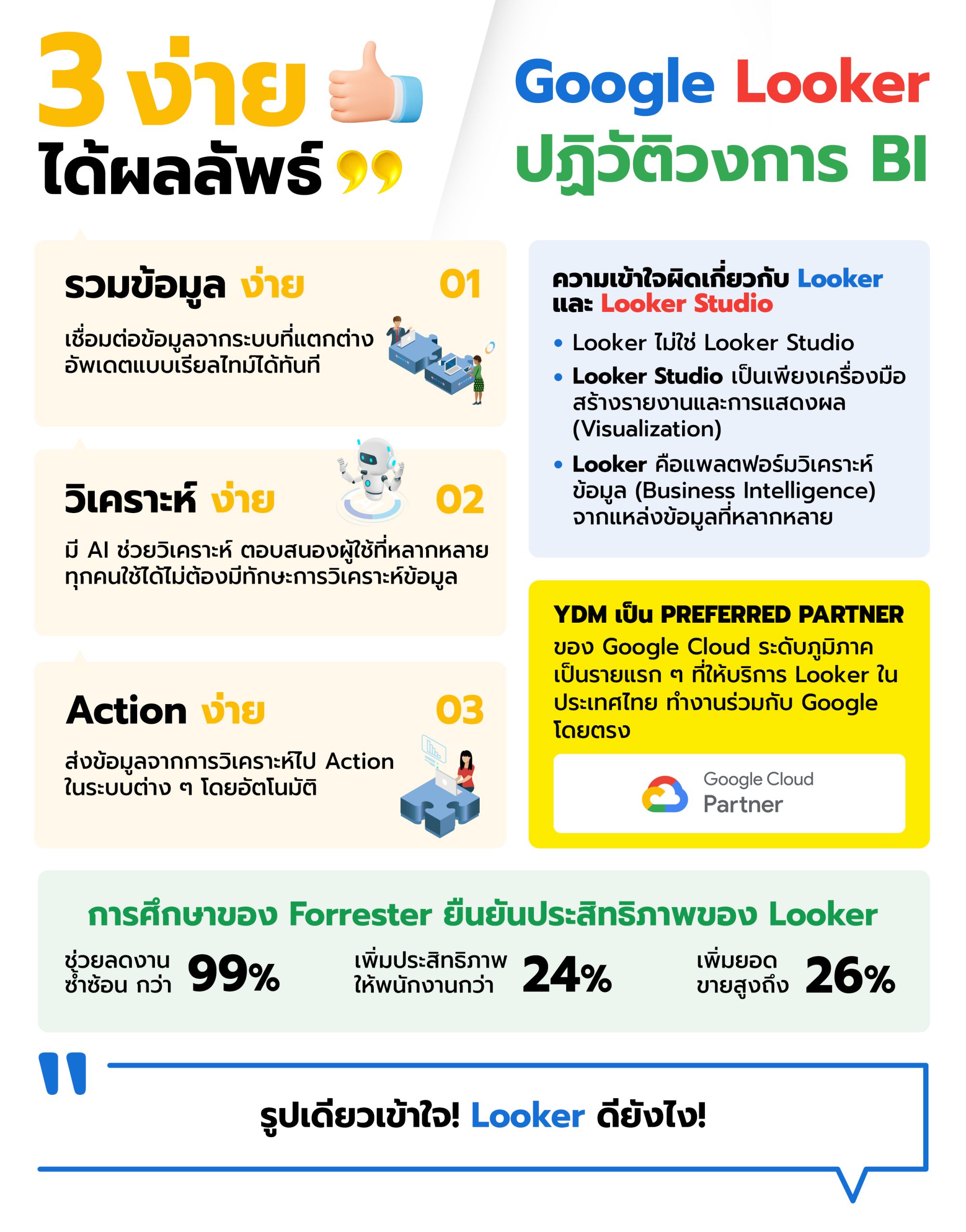
YDM Transforms the BI Landscape with Looker: Making Data “Simple” and More Effective (Looker is not Looker Studio)
Dec 17, 2024
{
News
}
YDM Transforms the BI Landscape with Looker: Making Data “Simple” and More Effective (Looker is not Looker Studio)
Dec 17, 2024
{
News
}
Unlocking the Secret: 8 Keys to Creating Impactful Advertising Campaigns
Jan 15, 2025
{
News
}
YDM Makes Waves with Double Wins at Meta Awards, Reveals Key Drivers Behind Its Success
Dec 24, 2024
{
News
}
YDM Transforms the BI Landscape with Looker: Making Data “Simple” and More Effective (Looker is not Looker Studio)
Dec 17, 2024
{
News
}
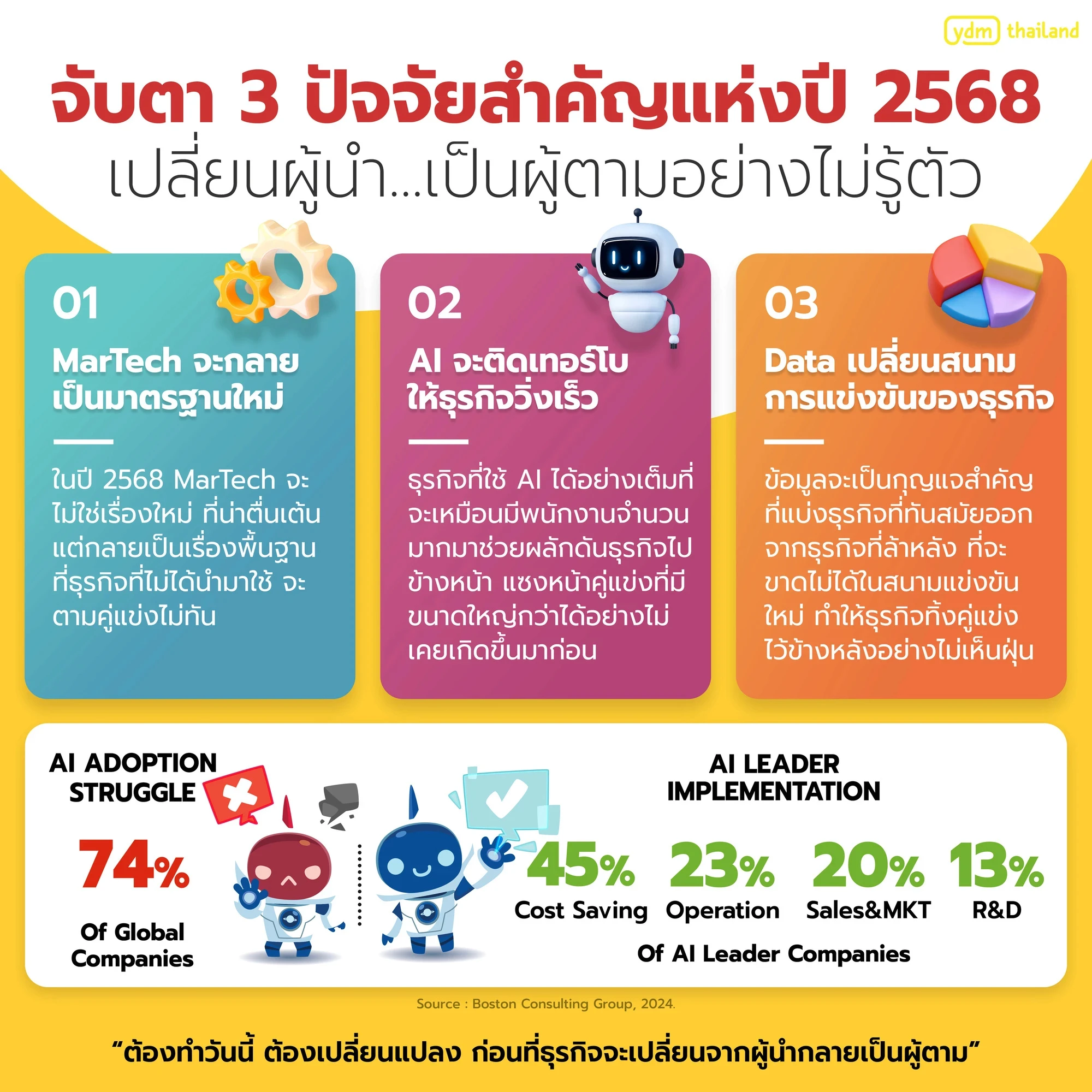
Watch Out: 3 Key Factors in 2025 That Could Turn Leaders into Followers Without Realizing It
Dec 3, 2024
{
News
}
Unlocking the Secret: 8 Keys to Creating Impactful Advertising Campaigns
Jan 15, 2025
{
News
}
YDM Makes Waves with Double Wins at Meta Awards, Reveals Key Drivers Behind Its Success
Dec 24, 2024
{
News
}
YDM Transforms the BI Landscape with Looker: Making Data “Simple” and More Effective (Looker is not Looker Studio)
Dec 17, 2024
{
News
}
Watch Out: 3 Key Factors in 2025 That Could Turn Leaders into Followers Without Realizing It
Dec 3, 2024