[
Article
]
Alibaba Recruits an 83-Year-Old Grandma Researcher, Revealing a New Way to Enter the Chinese Market!
Alibaba Recruits an 83-Year-Old Grandma Researcher, Revealing a New Way to Enter the Chinese Market!
By Chadakorn Tanasuwankasem, Chief Executive Officer, AVG Thailand
By Chadakorn Tanasuwankasem, Chief Executive Officer, AVG Thailand
By Chadakorn Tanasuwankasem, Chief Executive Officer, AVG Thailand

Alibaba’s latest recruitment drive—the giant Chinese e-commerce company and parent of Taobao—created a major buzz across Chinese social media. “Muayni” saw this story all over WeChat, just as widely as Thailand’s “Auntie Axe” news, because one of Alibaba’s requirements was that applicants had to be over 60 years old. In addition, they needed at least three years of online shopping experience. Even though those qualifications sound difficult to find, more than 3,000 seniors were interested and submitted applications. More than half of the elderly applicants held master’s or doctoral degrees, many could speak two languages, and some were skilled in HTML5 writing or Photoshop. Some even submitted their résumés in PPT format and ended with a QR code to scan for additional information. Young people really had reason to be embarrassed.
As for the salary the elderly applicants would receive, it was not very much—only around 2 million baht per year.
According to the job description, the role involved research and user experience development for Taobao, the largest C2C platform in China. The salary for the elderly hires was not very much—just around 2 million baht per year—and after intense selection, one of the final ten candidates was an 83-year-old lady named Grandma Li, whose profile was extraordinary.
She graduated from Tsinghua University, one of China’s top universities, and had more than six years of online shopping experience. Beyond e-commerce, this remarkable young-at-heart lady was also interested in Bitcoin, blockchain, and AI (Artificial Intelligence). With skills like these, she truly deserves to be called a wonder woman.

The reason Alibaba recruited specifically among the elderly is that in January Taobao introduced a new feature called Family Account, designed especially for older shoppers. This feature links the Taobao accounts of family members, allowing children and grandchildren to help select products for their parents or grandparents and even pay for them immediately. It is truly designed to please elderly shoppers.

Example image of the Family Account feature
It is expected that by 2020 there will be as many as 248 million elderly people, equal to the combined populations of the United Kingdom, France, Germany, Norway, Denmark, Portugal, and Austria.
Elderly people may have less time left, but they have plenty of money. Most elderly people in China spend their daily lives exercising, traveling, and shopping. Data from 2016 showed that China had 230 million people over the age of 60, or 16.7% of the total population, and by 2020 this was expected to reach 248 million—equal to the entire populations of the United Kingdom, France, Germany, Norway, Denmark, Portugal, and Austria combined. This is an enormous market.
More than 80% of elderly Chinese people have mobile phones, and most of them use smartphones that allow online shopping.
Let us look at online shopping figures. More than 80% of elderly Chinese people own mobile phones, and most use smartphones that can shop online. On average, elderly people shop online for 44 items per person per year, totaling more than 5,000 yuan per person (about 25,000 baht). On Taobao alone, there are already more than 30 million members over the age of 60. The figures also show that these elderly shoppers keep more money in e-wallets than young people or average Chinese consumers. While ordinary Chinese consumers typically have around 4,000 yuan (20,000 baht) left in Alipay, elderly people keep around 7,000 yuan (35,000 baht), which means their purchasing power is almost twice as high.
“Muayni” believes this phenomenon reveals a new opportunity for Thai entrepreneurs in health-related products.
From this phenomenon, “Muayni” believes it clearly reveals a new opportunity for Thai entrepreneurs in health-related products, because in the first half of 2017 this category held as much as 25.8% of China’s online market share. Most buyers were elderly consumers. Chinese tourists visiting Thailand have also long favored health-related products from Thailand, such as balms and cough remedies. Therefore, this is a good opportunity now for Thai health products on Chinese e-commerce platforms. It is worth trying, because with Alibaba investing seriously in this area and based on the statistics, Thai products shining on Chinese e-commerce should not be difficult at all.
Alibaba’s latest recruitment drive—the giant Chinese e-commerce company and parent of Taobao—created a major buzz across Chinese social media. “Muayni” saw this story all over WeChat, just as widely as Thailand’s “Auntie Axe” news, because one of Alibaba’s requirements was that applicants had to be over 60 years old. In addition, they needed at least three years of online shopping experience. Even though those qualifications sound difficult to find, more than 3,000 seniors were interested and submitted applications. More than half of the elderly applicants held master’s or doctoral degrees, many could speak two languages, and some were skilled in HTML5 writing or Photoshop. Some even submitted their résumés in PPT format and ended with a QR code to scan for additional information. Young people really had reason to be embarrassed.
As for the salary the elderly applicants would receive, it was not very much—only around 2 million baht per year.
According to the job description, the role involved research and user experience development for Taobao, the largest C2C platform in China. The salary for the elderly hires was not very much—just around 2 million baht per year—and after intense selection, one of the final ten candidates was an 83-year-old lady named Grandma Li, whose profile was extraordinary.
She graduated from Tsinghua University, one of China’s top universities, and had more than six years of online shopping experience. Beyond e-commerce, this remarkable young-at-heart lady was also interested in Bitcoin, blockchain, and AI (Artificial Intelligence). With skills like these, she truly deserves to be called a wonder woman.
The reason Alibaba recruited specifically among the elderly is that in January Taobao introduced a new feature called Family Account, designed especially for older shoppers. This feature links the Taobao accounts of family members, allowing children and grandchildren to help select products for their parents or grandparents and even pay for them immediately. It is truly designed to please elderly shoppers.
Example image of the Family Account feature
It is expected that by 2020 there will be as many as 248 million elderly people, equal to the combined populations of the United Kingdom, France, Germany, Norway, Denmark, Portugal, and Austria.
Elderly people may have less time left, but they have plenty of money. Most elderly people in China spend their daily lives exercising, traveling, and shopping. Data from 2016 showed that China had 230 million people over the age of 60, or 16.7% of the total population, and by 2020 this was expected to reach 248 million—equal to the entire populations of the United Kingdom, France, Germany, Norway, Denmark, Portugal, and Austria combined. This is an enormous market.
More than 80% of elderly Chinese people have mobile phones, and most of them use smartphones that allow online shopping.
Let us look at online shopping figures. More than 80% of elderly Chinese people own mobile phones, and most use smartphones that can shop online. On average, elderly people shop online for 44 items per person per year, totaling more than 5,000 yuan per person (about 25,000 baht). On Taobao alone, there are already more than 30 million members over the age of 60. The figures also show that these elderly shoppers keep more money in e-wallets than young people or average Chinese consumers. While ordinary Chinese consumers typically have around 4,000 yuan (20,000 baht) left in Alipay, elderly people keep around 7,000 yuan (35,000 baht), which means their purchasing power is almost twice as high.
“Muayni” believes this phenomenon reveals a new opportunity for Thai entrepreneurs in health-related products.
From this phenomenon, “Muayni” believes it clearly reveals a new opportunity for Thai entrepreneurs in health-related products, because in the first half of 2017 this category held as much as 25.8% of China’s online market share. Most buyers were elderly consumers. Chinese tourists visiting Thailand have also long favored health-related products from Thailand, such as balms and cough remedies. Therefore, this is a good opportunity now for Thai health products on Chinese e-commerce platforms. It is worth trying, because with Alibaba investing seriously in this area and based on the statistics, Thai products shining on Chinese e-commerce should not be difficult at all.
Alibaba’s latest recruitment drive—the giant Chinese e-commerce company and parent of Taobao—created a major buzz across Chinese social media. “Muayni” saw this story all over WeChat, just as widely as Thailand’s “Auntie Axe” news, because one of Alibaba’s requirements was that applicants had to be over 60 years old. In addition, they needed at least three years of online shopping experience. Even though those qualifications sound difficult to find, more than 3,000 seniors were interested and submitted applications. More than half of the elderly applicants held master’s or doctoral degrees, many could speak two languages, and some were skilled in HTML5 writing or Photoshop. Some even submitted their résumés in PPT format and ended with a QR code to scan for additional information. Young people really had reason to be embarrassed.
As for the salary the elderly applicants would receive, it was not very much—only around 2 million baht per year.
According to the job description, the role involved research and user experience development for Taobao, the largest C2C platform in China. The salary for the elderly hires was not very much—just around 2 million baht per year—and after intense selection, one of the final ten candidates was an 83-year-old lady named Grandma Li, whose profile was extraordinary.
She graduated from Tsinghua University, one of China’s top universities, and had more than six years of online shopping experience. Beyond e-commerce, this remarkable young-at-heart lady was also interested in Bitcoin, blockchain, and AI (Artificial Intelligence). With skills like these, she truly deserves to be called a wonder woman.
The reason Alibaba recruited specifically among the elderly is that in January Taobao introduced a new feature called Family Account, designed especially for older shoppers. This feature links the Taobao accounts of family members, allowing children and grandchildren to help select products for their parents or grandparents and even pay for them immediately. It is truly designed to please elderly shoppers.
Example image of the Family Account feature
It is expected that by 2020 there will be as many as 248 million elderly people, equal to the combined populations of the United Kingdom, France, Germany, Norway, Denmark, Portugal, and Austria.
Elderly people may have less time left, but they have plenty of money. Most elderly people in China spend their daily lives exercising, traveling, and shopping. Data from 2016 showed that China had 230 million people over the age of 60, or 16.7% of the total population, and by 2020 this was expected to reach 248 million—equal to the entire populations of the United Kingdom, France, Germany, Norway, Denmark, Portugal, and Austria combined. This is an enormous market.
More than 80% of elderly Chinese people have mobile phones, and most of them use smartphones that allow online shopping.
Let us look at online shopping figures. More than 80% of elderly Chinese people own mobile phones, and most use smartphones that can shop online. On average, elderly people shop online for 44 items per person per year, totaling more than 5,000 yuan per person (about 25,000 baht). On Taobao alone, there are already more than 30 million members over the age of 60. The figures also show that these elderly shoppers keep more money in e-wallets than young people or average Chinese consumers. While ordinary Chinese consumers typically have around 4,000 yuan (20,000 baht) left in Alipay, elderly people keep around 7,000 yuan (35,000 baht), which means their purchasing power is almost twice as high.
“Muayni” believes this phenomenon reveals a new opportunity for Thai entrepreneurs in health-related products.
From this phenomenon, “Muayni” believes it clearly reveals a new opportunity for Thai entrepreneurs in health-related products, because in the first half of 2017 this category held as much as 25.8% of China’s online market share. Most buyers were elderly consumers. Chinese tourists visiting Thailand have also long favored health-related products from Thailand, such as balms and cough remedies. Therefore, this is a good opportunity now for Thai health products on Chinese e-commerce platforms. It is worth trying, because with Alibaba investing seriously in this area and based on the statistics, Thai products shining on Chinese e-commerce should not be difficult at all.
[
Connect
]
How can we help you innovate?
Drop us a line.
Get in
touch
[
Connect
]
How can we help you innovate?
Drop us a line.
Get in
touch
[
Connect
]
How can we help you innovate?
Drop us a line.
Get in
touch
Related
Movements.

{
News
}
Unlocking the Secret: 8 Keys to Creating Impactful Advertising Campaigns
Jan 15, 2025
{
News
}
Unlocking the Secret: 8 Keys to Creating Impactful Advertising Campaigns
Jan 15, 2025

{
News
}
YDM Makes Waves with Double Wins at Meta Awards, Reveals Key Drivers Behind Its Success
Dec 24, 2024
{
News
}
YDM Makes Waves with Double Wins at Meta Awards, Reveals Key Drivers Behind Its Success
Dec 24, 2024

{
News
}
YDM Transforms the BI Landscape with Looker: Making Data “Simple” and More Effective (Looker is not Looker Studio)
Dec 17, 2024
{
News
}
YDM Transforms the BI Landscape with Looker: Making Data “Simple” and More Effective (Looker is not Looker Studio)
Dec 17, 2024
{
News
}
Unlocking the Secret: 8 Keys to Creating Impactful Advertising Campaigns
Jan 15, 2025
{
News
}
YDM Makes Waves with Double Wins at Meta Awards, Reveals Key Drivers Behind Its Success
Dec 24, 2024
{
News
}
YDM Transforms the BI Landscape with Looker: Making Data “Simple” and More Effective (Looker is not Looker Studio)
Dec 17, 2024
{
News
}
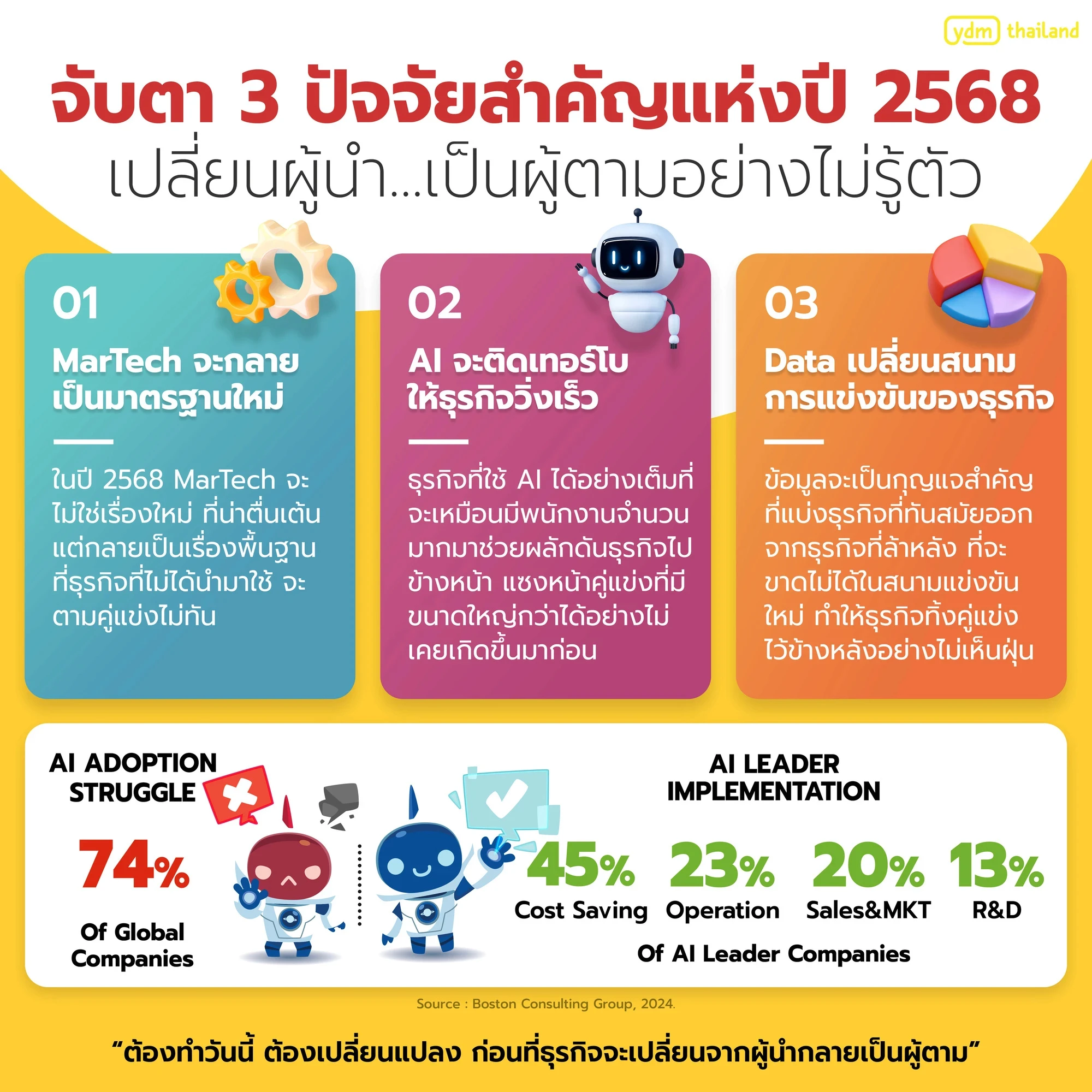
Watch Out: 3 Key Factors in 2025 That Could Turn Leaders into Followers Without Realizing It
Dec 3, 2024
{
News
}
Unlocking the Secret: 8 Keys to Creating Impactful Advertising Campaigns
Jan 15, 2025
{
News
}
YDM Makes Waves with Double Wins at Meta Awards, Reveals Key Drivers Behind Its Success
Dec 24, 2024
{
News
}
YDM Transforms the BI Landscape with Looker: Making Data “Simple” and More Effective (Looker is not Looker Studio)
Dec 17, 2024
{
News
}
Watch Out: 3 Key Factors in 2025 That Could Turn Leaders into Followers Without Realizing It
Dec 3, 2024