[
News
]
YDM Thailand joins hands with STEPS Academy to create a new marketing landscape, pointing out that “customer behavioral data,” more than just “data,” is a business opportunity
YDM Thailand joins hands with STEPS Academy to create a new marketing landscape, pointing out that “customer behavioral data,” more than just “data,” is a business opportunity
By YDM
By YDM
By YDM

YDM Thailand and STEPS Academy joined forces to decode Marketing Transformation, identifying “Data-Driven Marketing” as a key driver and recommending three ways of thinking to create a new marketing landscape: 1) Data is the heart, 2) collect individual customer behavioral data at every touchpoint, not just personal information and purchase history, and 3) collect enough data to enable personalized and automated marketing effectively in order to seek new opportunities. The two organizations also revealed that brands remain trapped and unable to fully use the potential of data, while highlighting three major obstacles that brands must solve if they want to succeed in modern marketing.
Mr. Tanapon Subsomboon, Chief Executive Officer of YDM (Thailand) Co., Ltd., said at the seminar “Decoding the Blueprint for a Data-Driven Marketing Transformation,” jointly organized by YDM Thailand and STEPS Academy, that brands today remain trapped and are unable to successfully drive Marketing Transformation because they cannot use the full potential of their data. At the same time, Data-Driven Marketing is a key mechanism for creating a new marketing landscape and seeking new opportunities for brands. From working with more than 200 client companies, only 10% have been able to fully utilize the power of data. Brands therefore need to rethink data—how to make consumers think of a brand’s products and services instantly the moment they come to mind. Truly understanding consumer behavior is therefore extremely important for brands.
He recommended three ways of thinking for brands to make marketing truly resonate: 1. Data is the heart of the new form of marketing, and in the near future AI will be used in marketing even more. AI can perform well only if a brand’s data is stored correctly. 2. The indispensable type of data to collect is behavioral data. Today, YDM and STEPS find that most brands mainly collect customer profile data and transactional data. Proper behavioral data collection must happen across every channel and every touchpoint, such as websites, social media, ads on various platforms, chat messages, CRM, POS, e-commerce, and more, and all of it must be combined in one place and identified so that the person in each channel is recognized as the same individual. Current technology is already capable of doing this. 3. Once enough data has been collected, it can be analyzed to the point where brands can predict individual customer behavior, enabling personalized and automated marketing that strengthens marketing capability.

At present, many brands in Thailand still cannot use data efficiency in a full-loop way. YDM classifies organizations and brands undergoing Marketing Transformation into four groups: Dinosaur, organizations that market without data, accounting for about 20%; Chimpanzee, those that collect data but do not use it and keep it in silos, about 50%; Sapiens, those that consolidate data and can use it partly for personalization and automation, about 25%; and finally Homo Deus, the future species that can use data to generate measurable sales, only about 5%. However, the trap that causes the number of brands in the Sapiens and Homo Deus groups to remain low comes from three major factors:
1. People, which is the hardest issue—especially mindset, which is the most difficult thing to change because many remain attached to past success until it becomes a formula and are unwilling to accept new forms of marketing. Meanwhile, marketing methods today have changed completely, such as segmentation based on behavior, marketing to collect data instead of only selling products, breaking audiences into many small segments, and creating content for many target groups with AI as a supporting tool.
2. Know-how. Some brands know they need to collect data but cannot do it because data is stored separately by departments, not shared across teams, or kept by agencies or sales representatives instead of by the brand itself. In other cases, brands collect data but do not know how to use it.
3. Technology. Most brands face the problem that marketing teams do not understand technology well enough to apply it to improve marketing capability, while technology personnel do not understand marketing and business well enough to connect technology or MarTech tools, which are essential for marketing and business growth.

Ms. Nattawee Tantisatchatham, President and Co-Founder of STEPS Academy, a consulting and training provider in Digital & Data Marketing, said that from her experience advising and working with brands, there are also three problems related to data that both large businesses and SMEs face, causing marketing transformation to stall: 1) scattered data collection, 2) data that is collected is broad and superficial, making it difficult to extend into business opportunities, such as basic information, name, email, phone number, and purchase total, and 3) the people involved, as most marketing teams still lack skills in using new marketing technology, while those who do have technology skills are usually IT teams, who lack business planning or marketing strategy skills.
For brands interested in driving a new landscape in modern marketing and successfully moving beyond Marketing Transformation, YDM Thailand is an expert in enterprise-level Marketing Transformation, with more than 14 years of experience in Thailand’s marketing and advertising industry. More information on marketing transformation is available at www.ydmthailand.com
Credit : https://positioningmag.com/1449791
YDM Thailand and STEPS Academy joined forces to decode Marketing Transformation, identifying “Data-Driven Marketing” as a key driver and recommending three ways of thinking to create a new marketing landscape: 1) Data is the heart, 2) collect individual customer behavioral data at every touchpoint, not just personal information and purchase history, and 3) collect enough data to enable personalized and automated marketing effectively in order to seek new opportunities. The two organizations also revealed that brands remain trapped and unable to fully use the potential of data, while highlighting three major obstacles that brands must solve if they want to succeed in modern marketing.
Mr. Tanapon Subsomboon, Chief Executive Officer of YDM (Thailand) Co., Ltd., said at the seminar “Decoding the Blueprint for a Data-Driven Marketing Transformation,” jointly organized by YDM Thailand and STEPS Academy, that brands today remain trapped and are unable to successfully drive Marketing Transformation because they cannot use the full potential of their data. At the same time, Data-Driven Marketing is a key mechanism for creating a new marketing landscape and seeking new opportunities for brands. From working with more than 200 client companies, only 10% have been able to fully utilize the power of data. Brands therefore need to rethink data—how to make consumers think of a brand’s products and services instantly the moment they come to mind. Truly understanding consumer behavior is therefore extremely important for brands.
He recommended three ways of thinking for brands to make marketing truly resonate: 1. Data is the heart of the new form of marketing, and in the near future AI will be used in marketing even more. AI can perform well only if a brand’s data is stored correctly. 2. The indispensable type of data to collect is behavioral data. Today, YDM and STEPS find that most brands mainly collect customer profile data and transactional data. Proper behavioral data collection must happen across every channel and every touchpoint, such as websites, social media, ads on various platforms, chat messages, CRM, POS, e-commerce, and more, and all of it must be combined in one place and identified so that the person in each channel is recognized as the same individual. Current technology is already capable of doing this. 3. Once enough data has been collected, it can be analyzed to the point where brands can predict individual customer behavior, enabling personalized and automated marketing that strengthens marketing capability.
At present, many brands in Thailand still cannot use data efficiency in a full-loop way. YDM classifies organizations and brands undergoing Marketing Transformation into four groups: Dinosaur, organizations that market without data, accounting for about 20%; Chimpanzee, those that collect data but do not use it and keep it in silos, about 50%; Sapiens, those that consolidate data and can use it partly for personalization and automation, about 25%; and finally Homo Deus, the future species that can use data to generate measurable sales, only about 5%. However, the trap that causes the number of brands in the Sapiens and Homo Deus groups to remain low comes from three major factors:
1. People, which is the hardest issue—especially mindset, which is the most difficult thing to change because many remain attached to past success until it becomes a formula and are unwilling to accept new forms of marketing. Meanwhile, marketing methods today have changed completely, such as segmentation based on behavior, marketing to collect data instead of only selling products, breaking audiences into many small segments, and creating content for many target groups with AI as a supporting tool.
2. Know-how. Some brands know they need to collect data but cannot do it because data is stored separately by departments, not shared across teams, or kept by agencies or sales representatives instead of by the brand itself. In other cases, brands collect data but do not know how to use it.
3. Technology. Most brands face the problem that marketing teams do not understand technology well enough to apply it to improve marketing capability, while technology personnel do not understand marketing and business well enough to connect technology or MarTech tools, which are essential for marketing and business growth.
Ms. Nattawee Tantisatchatham, President and Co-Founder of STEPS Academy, a consulting and training provider in Digital & Data Marketing, said that from her experience advising and working with brands, there are also three problems related to data that both large businesses and SMEs face, causing marketing transformation to stall: 1) scattered data collection, 2) data that is collected is broad and superficial, making it difficult to extend into business opportunities, such as basic information, name, email, phone number, and purchase total, and 3) the people involved, as most marketing teams still lack skills in using new marketing technology, while those who do have technology skills are usually IT teams, who lack business planning or marketing strategy skills.
For brands interested in driving a new landscape in modern marketing and successfully moving beyond Marketing Transformation, YDM Thailand is an expert in enterprise-level Marketing Transformation, with more than 14 years of experience in Thailand’s marketing and advertising industry. More information on marketing transformation is available at www.ydmthailand.com
Credit : https://positioningmag.com/1449791
YDM Thailand and STEPS Academy joined forces to decode Marketing Transformation, identifying “Data-Driven Marketing” as a key driver and recommending three ways of thinking to create a new marketing landscape: 1) Data is the heart, 2) collect individual customer behavioral data at every touchpoint, not just personal information and purchase history, and 3) collect enough data to enable personalized and automated marketing effectively in order to seek new opportunities. The two organizations also revealed that brands remain trapped and unable to fully use the potential of data, while highlighting three major obstacles that brands must solve if they want to succeed in modern marketing.
Mr. Tanapon Subsomboon, Chief Executive Officer of YDM (Thailand) Co., Ltd., said at the seminar “Decoding the Blueprint for a Data-Driven Marketing Transformation,” jointly organized by YDM Thailand and STEPS Academy, that brands today remain trapped and are unable to successfully drive Marketing Transformation because they cannot use the full potential of their data. At the same time, Data-Driven Marketing is a key mechanism for creating a new marketing landscape and seeking new opportunities for brands. From working with more than 200 client companies, only 10% have been able to fully utilize the power of data. Brands therefore need to rethink data—how to make consumers think of a brand’s products and services instantly the moment they come to mind. Truly understanding consumer behavior is therefore extremely important for brands.
He recommended three ways of thinking for brands to make marketing truly resonate: 1. Data is the heart of the new form of marketing, and in the near future AI will be used in marketing even more. AI can perform well only if a brand’s data is stored correctly. 2. The indispensable type of data to collect is behavioral data. Today, YDM and STEPS find that most brands mainly collect customer profile data and transactional data. Proper behavioral data collection must happen across every channel and every touchpoint, such as websites, social media, ads on various platforms, chat messages, CRM, POS, e-commerce, and more, and all of it must be combined in one place and identified so that the person in each channel is recognized as the same individual. Current technology is already capable of doing this. 3. Once enough data has been collected, it can be analyzed to the point where brands can predict individual customer behavior, enabling personalized and automated marketing that strengthens marketing capability.
At present, many brands in Thailand still cannot use data efficiency in a full-loop way. YDM classifies organizations and brands undergoing Marketing Transformation into four groups: Dinosaur, organizations that market without data, accounting for about 20%; Chimpanzee, those that collect data but do not use it and keep it in silos, about 50%; Sapiens, those that consolidate data and can use it partly for personalization and automation, about 25%; and finally Homo Deus, the future species that can use data to generate measurable sales, only about 5%. However, the trap that causes the number of brands in the Sapiens and Homo Deus groups to remain low comes from three major factors:
1. People, which is the hardest issue—especially mindset, which is the most difficult thing to change because many remain attached to past success until it becomes a formula and are unwilling to accept new forms of marketing. Meanwhile, marketing methods today have changed completely, such as segmentation based on behavior, marketing to collect data instead of only selling products, breaking audiences into many small segments, and creating content for many target groups with AI as a supporting tool.
2. Know-how. Some brands know they need to collect data but cannot do it because data is stored separately by departments, not shared across teams, or kept by agencies or sales representatives instead of by the brand itself. In other cases, brands collect data but do not know how to use it.
3. Technology. Most brands face the problem that marketing teams do not understand technology well enough to apply it to improve marketing capability, while technology personnel do not understand marketing and business well enough to connect technology or MarTech tools, which are essential for marketing and business growth.
Ms. Nattawee Tantisatchatham, President and Co-Founder of STEPS Academy, a consulting and training provider in Digital & Data Marketing, said that from her experience advising and working with brands, there are also three problems related to data that both large businesses and SMEs face, causing marketing transformation to stall: 1) scattered data collection, 2) data that is collected is broad and superficial, making it difficult to extend into business opportunities, such as basic information, name, email, phone number, and purchase total, and 3) the people involved, as most marketing teams still lack skills in using new marketing technology, while those who do have technology skills are usually IT teams, who lack business planning or marketing strategy skills.
For brands interested in driving a new landscape in modern marketing and successfully moving beyond Marketing Transformation, YDM Thailand is an expert in enterprise-level Marketing Transformation, with more than 14 years of experience in Thailand’s marketing and advertising industry. More information on marketing transformation is available at www.ydmthailand.com
Credit : https://positioningmag.com/1449791
[
Connect
]
How can we help you innovate?
Drop us a line.
Get in
touch
[
Connect
]
How can we help you innovate?
Drop us a line.
Get in
touch
[
Connect
]
How can we help you innovate?
Drop us a line.
Get in
touch
Related
Movements.

{
News
}
Unlocking the Secret: 8 Keys to Creating Impactful Advertising Campaigns
Jan 15, 2025
{
News
}
Unlocking the Secret: 8 Keys to Creating Impactful Advertising Campaigns
Jan 15, 2025
{
News
}
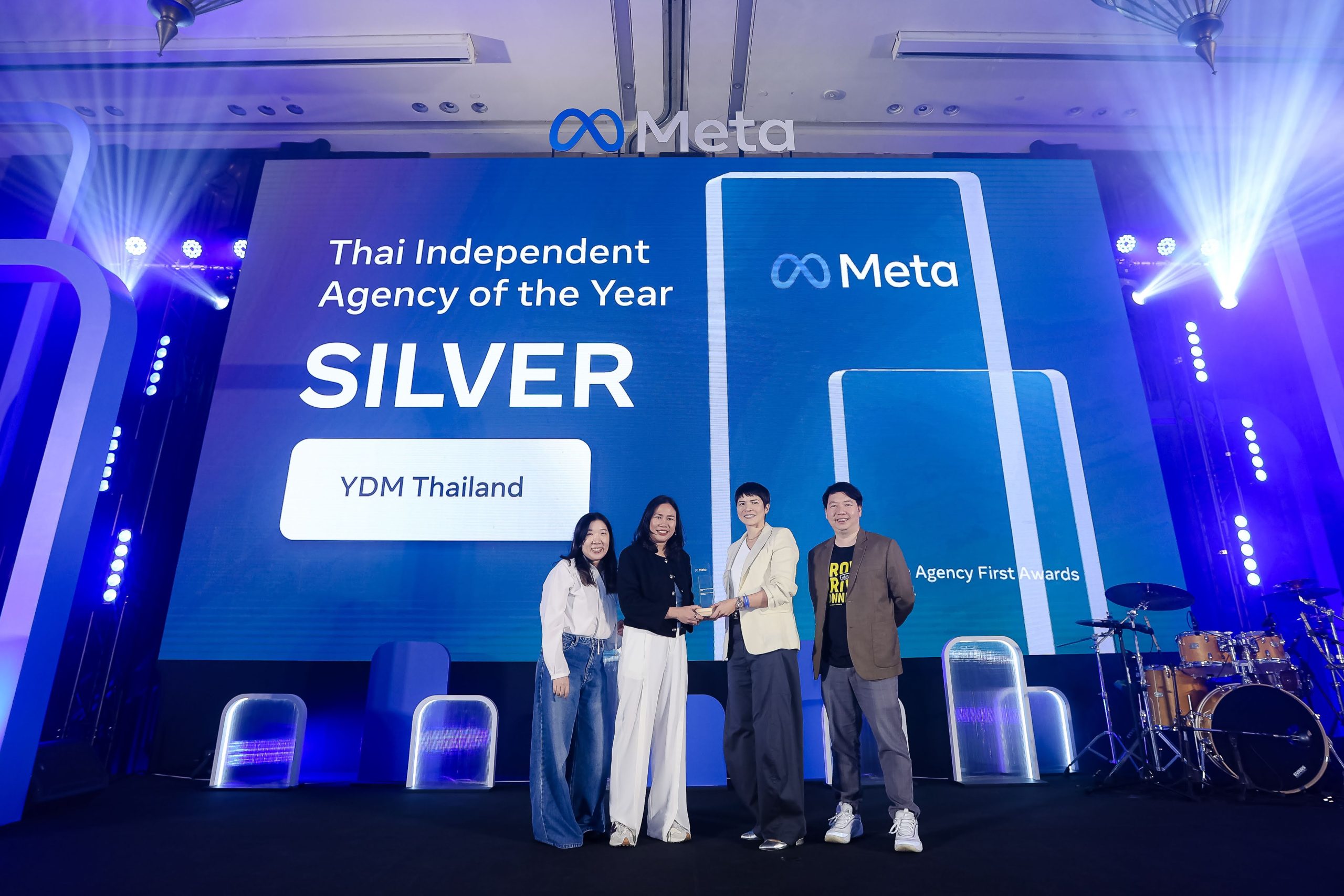
YDM Makes Waves with Double Wins at Meta Awards, Reveals Key Drivers Behind Its Success
Dec 24, 2024
{
News
}
YDM Makes Waves with Double Wins at Meta Awards, Reveals Key Drivers Behind Its Success
Dec 24, 2024
{
News
}
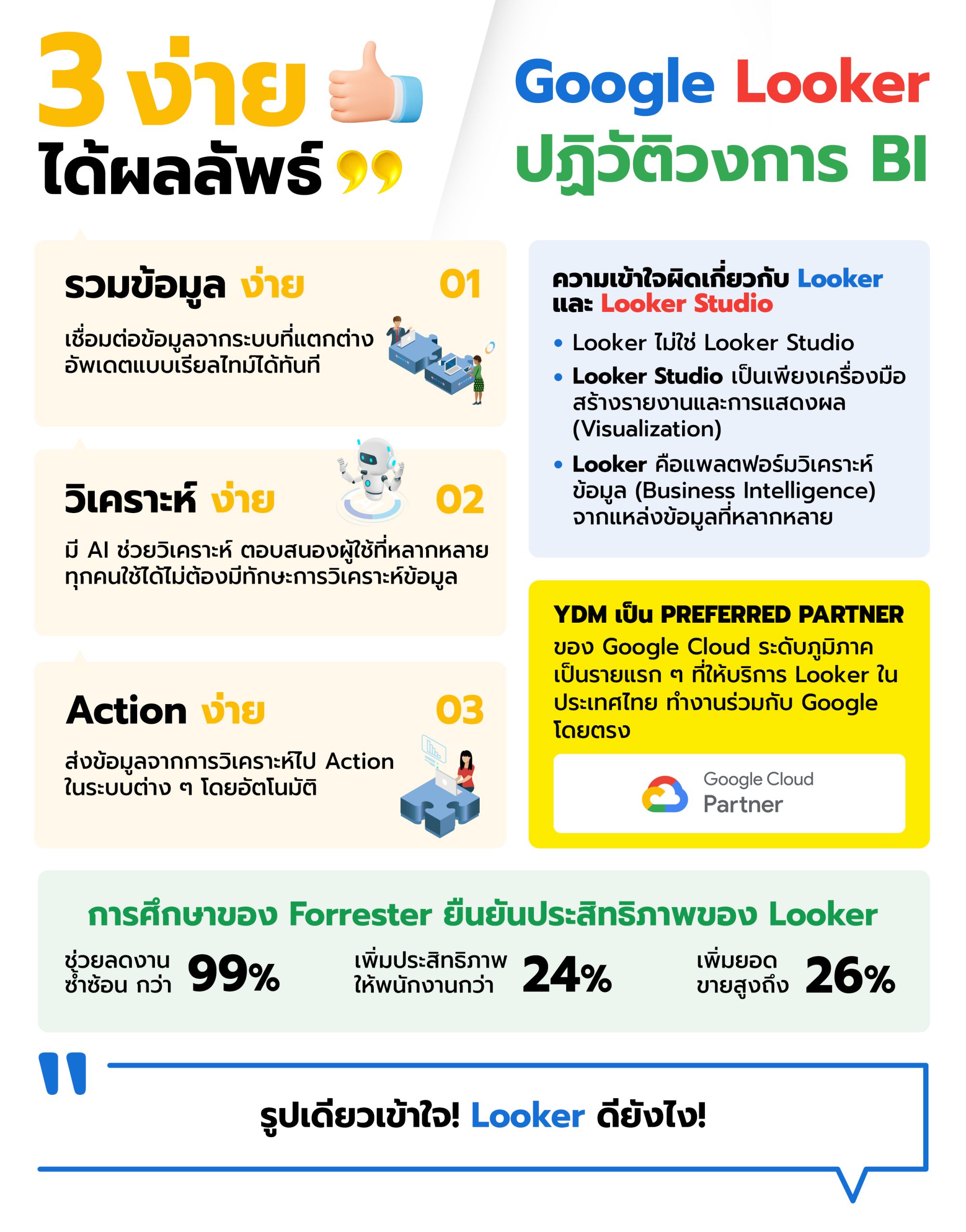
YDM Transforms the BI Landscape with Looker: Making Data “Simple” and More Effective (Looker is not Looker Studio)
Dec 17, 2024
{
News
}
YDM Transforms the BI Landscape with Looker: Making Data “Simple” and More Effective (Looker is not Looker Studio)
Dec 17, 2024
{
News
}
Unlocking the Secret: 8 Keys to Creating Impactful Advertising Campaigns
Jan 15, 2025
{
News
}
YDM Makes Waves with Double Wins at Meta Awards, Reveals Key Drivers Behind Its Success
Dec 24, 2024
{
News
}
YDM Transforms the BI Landscape with Looker: Making Data “Simple” and More Effective (Looker is not Looker Studio)
Dec 17, 2024
{
News
}
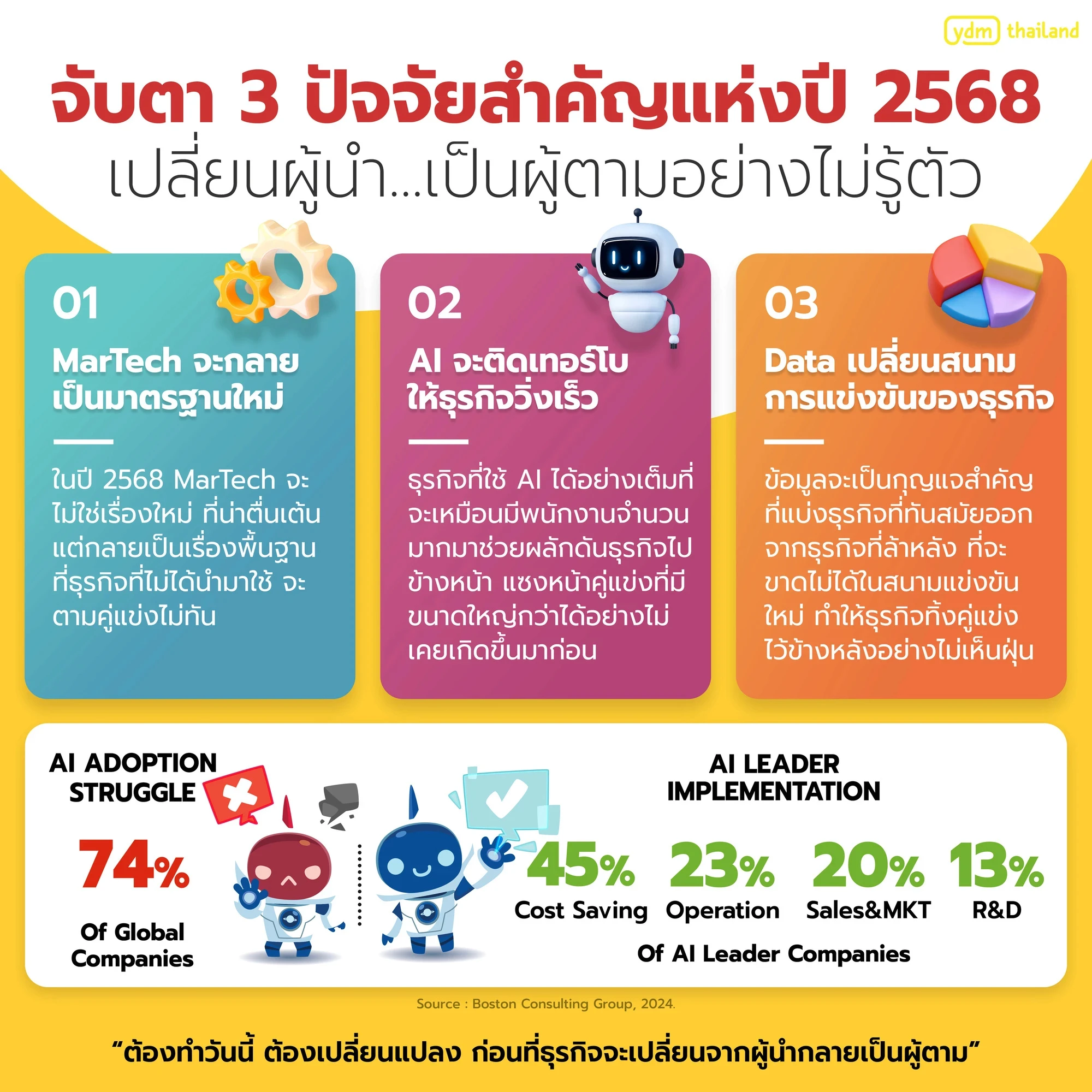
Watch Out: 3 Key Factors in 2025 That Could Turn Leaders into Followers Without Realizing It
Dec 3, 2024
{
News
}
Unlocking the Secret: 8 Keys to Creating Impactful Advertising Campaigns
Jan 15, 2025
{
News
}
YDM Makes Waves with Double Wins at Meta Awards, Reveals Key Drivers Behind Its Success
Dec 24, 2024
{
News
}
YDM Transforms the BI Landscape with Looker: Making Data “Simple” and More Effective (Looker is not Looker Studio)
Dec 17, 2024
{
News
}
Watch Out: 3 Key Factors in 2025 That Could Turn Leaders into Followers Without Realizing It
Dec 3, 2024